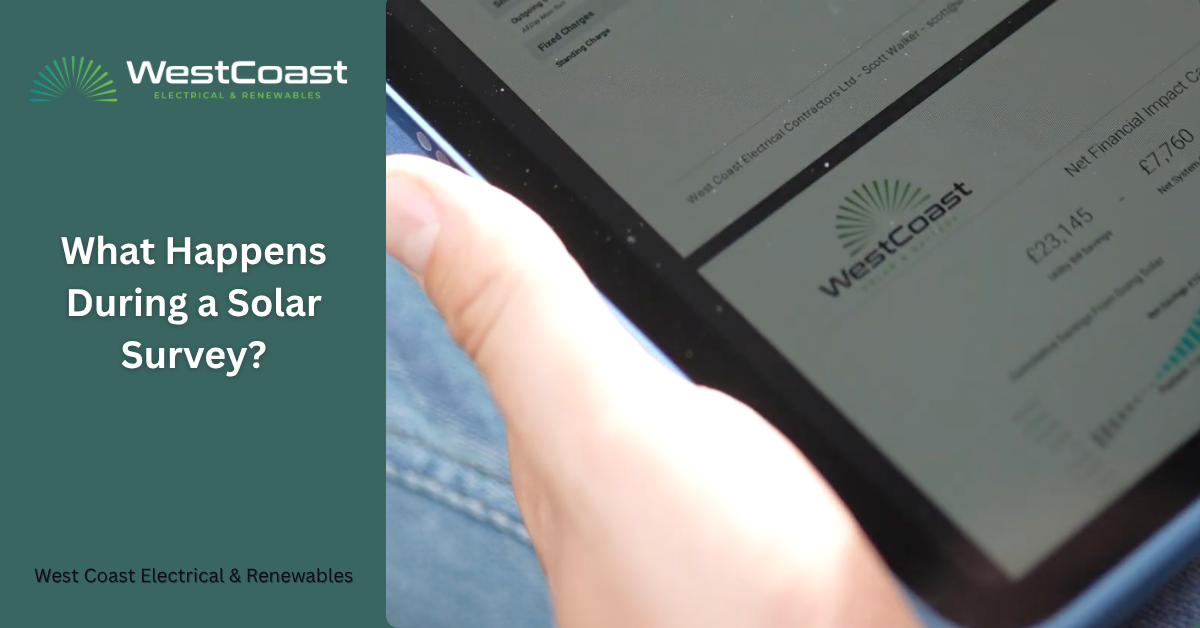
If you are thinking about solar panels, you may wonder what happens during a solar survey. A solar survey helps an installer understand your property, roof space, energy usage and where equipment can go. However, not every property needs a full site visit before work starts. In many cases, much of the information can be checked remotely, with final details confirmed on the day of installation.
At West Coast Electrical & Renewables, we always want to make the process as simple as possible. Some customers prefer a full survey visit, especially for larger systems or more complex properties. However, for straightforward installations, we can often use photos, videos, satellite imagery and information from the customer to prepare everything in advance.
Why a Solar Survey Matters
A solar survey helps make sure the system is designed correctly for the property. It gives the installer a chance to check the roof, assess access, review electricity usage and decide where the inverter and battery storage could be fitted.
It also helps avoid delays on installation day. If there are any concerns about roof condition, shading, scaffolding or cable routes, these can often be discussed before work starts.
Although a solar survey is important, it does not always have to mean a separate appointment. Many homes are suitable for a remote survey, especially if the customer can provide a few photos and some basic information.

What Is Checked During a Solar Survey?
During a solar survey, there are several key areas that are usually reviewed.
Roof Size and Roof Type
The first thing an installer will look at is the roof itself. This includes:
- The size of the available roof space
- The roof pitch and direction
- Whether there are any obstructions such as chimneys, vents or skylights
- The type of roof covering, such as slate, tile or flat roof
- Whether there is enough space for the number of panels required
South facing roofs are often seen as ideal, although east and west facing roofs can still perform very well. Even north facing roofs can sometimes work depending on the property and the customer’s goals.
Shading Around the Property
Shading can affect how much electricity the solar panels generate. Trees, nearby buildings, chimneys and dormers can all create shading at different times of the day.
This is something that can often be checked remotely using mapping tools, customer photos and satellite images. However, for more complicated properties, a site visit may be useful to assess shading more accurately.
Consumer Unit and Electrical Supply
The installer will also need to understand the property’s existing electrical system. This includes checking:
- The consumer unit
- Available space for new protective devices
- Earthing arrangements
- Cable routes
- Whether the property has single phase or three phase electric
For many properties, customers can simply send a photo of their consumer unit before the installation. This helps us prepare in advance and make sure everything is suitable.
Where Will the Inverter and Battery Go?
The inverter and battery storage system also need a suitable location. Many customers prefer them in a garage, utility room or loft space. Others may choose an external wall if the equipment is designed for outdoor use.
A solar survey helps decide where this equipment will work best. The location needs to allow for ventilation, easy cable routing and future access for maintenance if needed.
However, this is another area that can often be planned remotely. A few photos of the garage, loft or utility room are often enough to give a good idea of where the equipment can go.
Do All Solar Installations Need a Survey Visit?
No, not always. While some solar companies may insist on visiting every property, many installations can now be designed without needing a separate survey appointment.
For example, if the property is straightforward, the roof is easy to see and the customer can provide good photos, much of the survey process can be completed remotely.
This can save time for both the installer and the customer. It can also speed up the process, allowing the installation to be booked in sooner.
For larger properties, unusual roofs, complex cable routes or systems with battery storage and EV chargers, a survey visit may still be the best option.
At West Coast Electrical & Renewables, we assess every job individually. If we feel a site visit is needed, we will arrange one. If not, we can often complete the design work remotely and confirm the final details on the day of installation.
What Happens on Installation Day?
Even if a full survey has not taken place beforehand, the team will still complete final checks before starting work.
This includes confirming roof measurements, checking cable routes, reviewing the consumer unit and agreeing the exact location of the inverter and battery with the customer.
Because we prepare as much as possible in advance, this usually only takes a short amount of time on the day.
The aim is always to make the installation process smooth, efficient and stress free.

Solar Surveys for Battery Storage and EV Chargers
If you are adding battery storage or an EV charger alongside your solar panels, there may be a few extra checks needed.
For battery storage, the installer may need to assess wall space, ventilation and where cabling can be run. For EV chargers, they may also need to look at parking areas, cable routes and internet connection for smart charging features.
Again, much of this can often be checked remotely with photos and videos.
Thinking About Solar Panels?
If you are considering solar panels, battery storage or an EV charger, we can help you understand what is possible for your property.
Some homes will benefit from a full solar survey, while others can be planned remotely before the installation day. Either way, we will make sure the system is designed around your home, your energy usage and your future plans.
Ready to Find Out What Could Work for Your Home?
Our team can review your roof, discuss your options and advise whether a full solar survey is needed before installation.