Many homeowners start researching solar panels because they want to reduce their electricity bills. However, one of the most common questions we hear is whether solar panels can actually help lower the cost of running a home during the day.
The simple answer is yes. Solar panels generate electricity while daylight is available, which means your home can use that electricity before importing energy from the grid. As a result, you may reduce the amount of electricity you purchase from your supplier during daylight hours.
Understanding how this works can help you decide whether solar could be a worthwhile investment for your property.
How Do Solar Panels Reduce Daytime Electricity Costs?
Solar panels generate electricity whenever daylight reaches the panels. Contrary to popular belief, they do not require bright sunshine to produce energy.
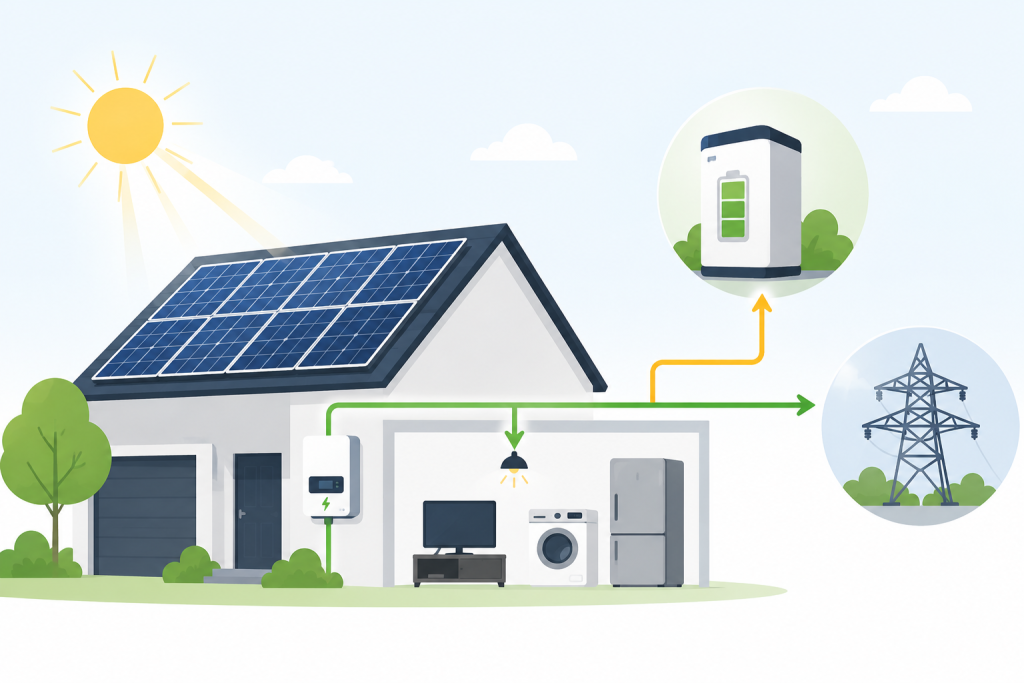
As your solar system generates electricity, your home will automatically use that energy first. Therefore, appliances that are running during the day can be powered by the electricity your system is producing.
For example, your solar panels may help support the electricity used by:
- Fridges and freezers
- Washing machines
- Dishwashers
- Home offices
- Lighting
- Televisions
- Internet routers
- Air source heat pumps
The more of your own solar generation you use, the less electricity you may need to import from the grid.
Thinking About Solar Panels?
If you’re curious about how much electricity a solar system could generate for your property, we can provide a tailored proposal based on your roof, energy usage and future plans.
Every Home Uses Energy Differently
One reason solar quotations vary is because every household uses electricity differently.
A retired couple who spend most of their day at home may use a large percentage of the electricity generated by their solar panels.
Meanwhile, a family that leaves the house during the day may use less of their generation while the property is empty.
This doesn’t necessarily mean solar won’t be beneficial. Instead, it highlights the importance of designing a system around the way you use energy.
An experienced renewable energy installer should consider your lifestyle as well as your roof size when recommending a solar system.
Why System Design Matters
Two properties could have the same number of solar panels but achieve different results.
Factors that influence performance include:
- Roof direction
- Roof pitch
- Shading
- Panel positioning
- Inverter selection
- Battery storage integration
This is why renewable energy experience is so important.
A properly designed system aims to maximise generation throughout the day rather than simply fitting as many panels as possible onto the roof.
Small design decisions can make a noticeable difference over the lifetime of the installation.
What Happens to Excess Solar Energy?
There are times when your solar panels may generate more electricity than your home is currently using.
When this happens, you generally have two options.
The electricity can either be exported to the grid or stored in a battery if one is installed.
Many homeowners initially choose solar panels without battery storage. However, some later decide to add a battery once they understand their usage patterns and generation levels.
Battery storage allows surplus electricity generated during the day to be used later in the evening when the sun has gone down.
Making the Most of Daytime Generation
There are several ways to increase the amount of solar electricity you use within your home.
For example, many homeowners choose to:
- Run washing machines during daylight hours
- Use dishwashers during the day
- Charge battery storage systems from solar generation
- Schedule heating and hot water systems where possible
- Charge EVs when solar generation is high
The goal is not necessarily to change your lifestyle completely. Instead, small adjustments can often help you make better use of the electricity your system generates.
Can Battery Storage Increase Savings?
Battery storage is becoming increasingly popular because it allows homeowners to store unused electricity.
Rather than exporting all surplus generation immediately, a battery can hold that energy for use later in the day.
This can be particularly useful during the evening when electricity demand is often at its highest.
Many modern battery systems also allow homeowners to take advantage of smart electricity tariffs by charging from cheaper off peak electricity rates overnight.
Depending on your usage, this can provide additional flexibility and help maximise the value of your energy system.
Looking at Solar and Battery Storage?
A battery isn’t essential for every solar installation. However, it can be a great addition for homeowners who want greater control over how and when they use electricity.
Do Solar Panels Work on Cloudy Days?
This is one of the most common myths surrounding solar energy.
Solar panels continue generating electricity even when conditions are cloudy.
Generation levels will be lower than on a bright summer day, but modern solar panels are designed to perform throughout the year.
In the UK, solar panels generate electricity during every month of the year.
As a result, homeowners continue to benefit from their systems even during autumn and winter.
Is Solar Right for Every Home?
Not every property is identical, which is why a professional survey is important.
Factors such as roof size, orientation, shading and electricity consumption all influence the suitability of a solar installation.
A detailed survey helps determine:
- Potential system size
- Expected annual generation
- Suitable equipment options
- Battery storage opportunities
- Potential return on investment
This allows recommendations to be tailored to the individual property rather than using a one size fits all approach.
Can Solar Panels Help Reduce Daytime Electricity Costs?
For many homeowners, the answer is yes.
Solar panels can help reduce the amount of electricity imported from the grid during daylight hours by generating energy directly from daylight.
The level of benefit will depend on factors such as system design, household energy usage and how much electricity is used while the panels are generating.
When combined with quality equipment and a well designed installation, solar panels can become an effective way to support your home’s daytime electricity needs for many years to come.

Ready to Find Out What’s Possible for Your Home?
Whether you’re considering solar panels on their own or as part of a larger renewable energy system, a tailored design can help you understand what your roof could achieve.