
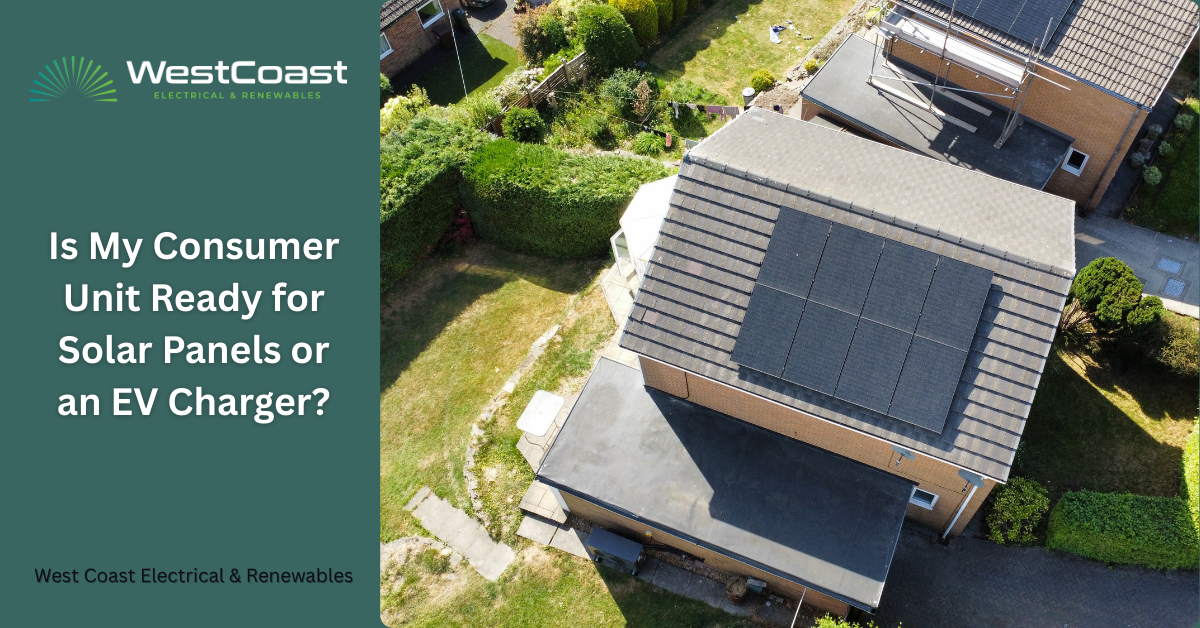
If you are planning to install renewable technology, you may wonder whether your consumer unit for solar or EV charger is suitable. This is one of the most important checks before adding solar panels, battery storage, or a home EV charger. Although many modern homes can support these upgrades, older electrical systems often need attention first.
Therefore, understanding your consumer unit is essential before moving forward.
What does a consumer unit actually do?
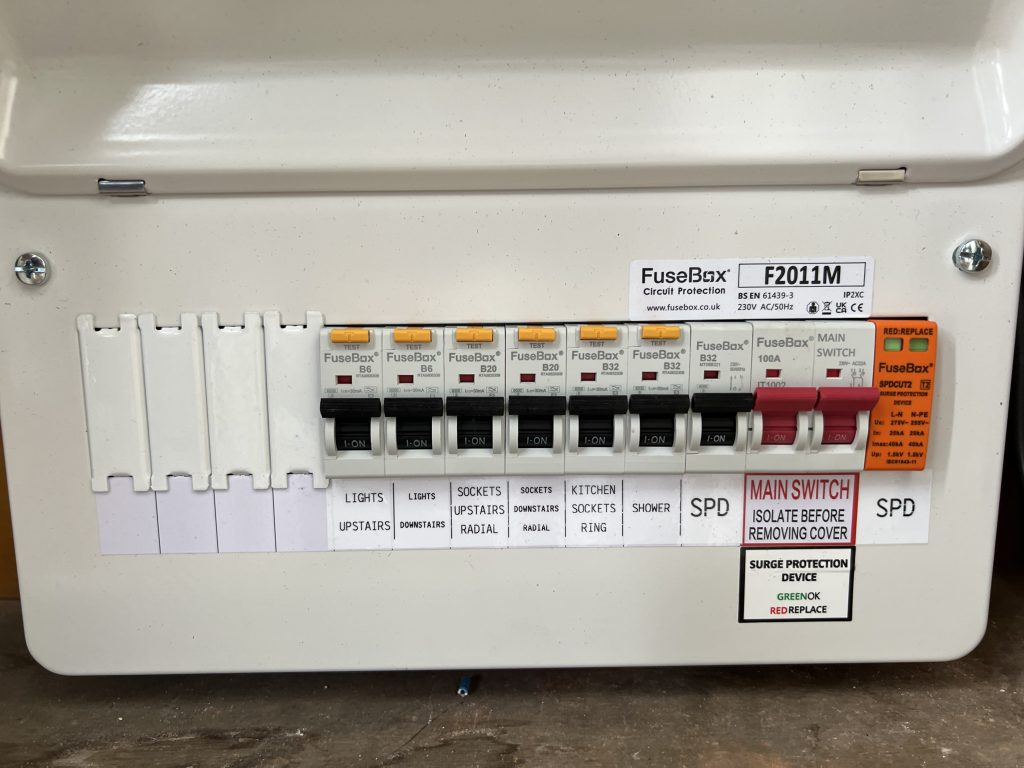
Your consumer unit, sometimes called a fuse board, controls and protects every electrical circuit in your property. It distributes electricity safely while protecting against overloads and faults.
Modern consumer units include:
• MCBs that protect individual circuits
• RCDs or RCBOs that provide fault protection
• Surge protection devices where required
• Clear circuit labelling
Because solar panels and EV chargers draw significant power, your consumer unit must handle the additional load safely. If it cannot, you risk nuisance tripping or overheating.
Why solar panels affect your consumer unit
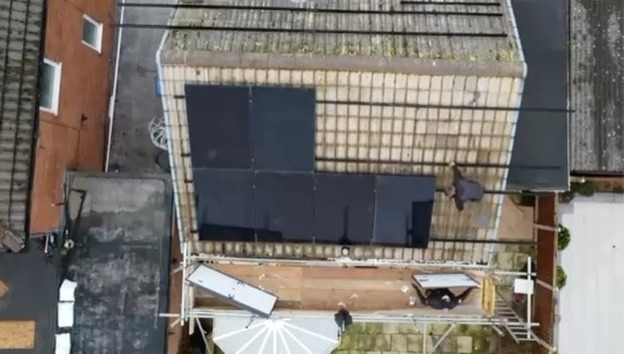
Solar panels connect to your electrical system through an inverter. That inverter feeds generated electricity into your consumer unit so your home can use it.
However, this means your system must:
• Have spare capacity
• Meet current wiring regulations
• Allow safe isolation
• Include appropriate protection devices
If your consumer unit is older, it may lack RCD protection or surge protection. As a result, it may not meet current standards for renewable installations.
In many cases, upgrading the consumer unit improves safety and futureproofs your property at the same time.
Why EV chargers place extra demand on your system
An EV charger adds a continuous high electrical load. A 7kW charger draws significantly more power than standard household appliances.
Therefore, before installing an EV charger, we assess:
• Incoming supply capacity
• Main fuse rating
• Spare ways in the consumer unit
• Overall electrical demand in the property
If the consumer unit lacks space or modern protection, it may need upgrading. However, this does not mean every home requires a full replacement. Often, newer boards already meet the required standards.
How to tell if your consumer unit is outdated
Several signs suggest your consumer unit may not be suitable for solar panels or an EV charger.
For example:
• Rewireable fuses instead of circuit breakers
• No RCD protection
• No spare capacity for additional circuits
• Plastic enclosure in older installations
• Poor or unclear labelling
If your consumer unit looks dated or crowded, it may struggle to support renewable upgrades safely.
On the other hand, many properties built in the last 10 to 15 years already have compliant boards.
Do I always need a consumer unit upgrade?
Not always. Every property differs, so we always assess the system before recommending upgrades.
Sometimes, the existing board works perfectly well. In other cases, we may recommend replacing it to improve safety and reliability. Although this adds cost upfront, it often prevents problems later.
In addition, a modern consumer unit allows for easier expansion. Therefore, if you plan to add battery storage or an air source heat pump in the future, upgrading now can save disruption later.
Futureproofing your home properly
When installing solar panels or an EV charger, thinking ahead makes a difference. For example, many homeowners initially install an EV charger and then add solar later. However, without planning, the system may require further electrical work.
By assessing your consumer unit early, we can design your installation properly from the start. As a result, you avoid repeat visits and unnecessary changes.
Futureproofing may include:
• Installing a larger capacity board
• Adding surge protection
• Ensuring spare ways remain available
• Designing circuits to accommodate future renewables
This approach keeps your electrical system safe while supporting long term upgrades.
Safety and compliance matter
Electrical regulations continue to evolve. Therefore, any new solar or EV installation must comply with current standards.
A suitable consumer unit ensures:
• Proper fault protection
• Safe isolation
• Correct earthing arrangements
• Reliable operation under load
Without these protections, systems may trip frequently or operate inefficiently.
More importantly, safety must always come first. Renewable technology increases electrical demand, so your infrastructure must match that demand.
What happens during an assessment?
When assessing whether your consumer unit is ready for solar panels or an EV charger, we carry out a full inspection. We check the condition of the board, test protective devices, and review your property’s electrical demand.
We also calculate load requirements to ensure the system operates within safe limits.
After that, we provide clear advice. If your consumer unit already meets standards, we confirm suitability. However, if you need any improvements, we will explain why and outline your options.
This transparent approach allows you to make an informed decision.
Planning solar or EV charging in Blackpool?
Many properties across Blackpool and surrounding areas vary in age and electrical condition. Consequently, some homes require upgrades, while others do not.
Because every property differs, a proper inspection always provides the most accurate answer.
If you are considering solar panels, battery storage, or an EV charger, checking your consumer unit early prevents delays later. It also ensures your installation runs smoothly from day one.
Ready to check your consumer unit?
If you are unsure whether your consumer unit for solar or EV charger is suitable, arranging an assessment is the best first step.
A quick inspection now can prevent issues later and ensure your renewable installation meets current regulations safely.


