Many homeowners ask the same question before installing solar. Is my roof suitable for solar panels, or will certain factors limit performance?
Solar panels can work on a wide range of properties. However, roof suitability plays an important role in how much electricity a system can generate. Several factors influence this, including roof direction, pitch, shading and available space.
Because every property is different, a professional survey helps determine whether a roof is suitable for solar panels. However, understanding the basics can help you decide whether solar could work for your home.
What Makes a Roof Suitable for Solar Panels?
When assessing whether a roof suitable for solar panels is possible, installers look at several key factors.
First, roof direction affects how much sunlight the panels receive. South facing roofs often produce the highest output. However, east and west facing roofs can still perform well and generate electricity throughout the day.
Second, roof pitch influences how efficiently panels capture sunlight. In the UK, a pitch between 30 and 40 degrees often provides strong performance. However, solar panels can still work effectively on both lower and steeper roofs.
Third, available roof space determines how many panels can be installed. More panels usually mean higher electricity generation. Therefore, larger roof areas often allow for more effective systems.
Because of these factors, many homes across Blackpool and the surrounding areas have roofs suitable for solar panels.
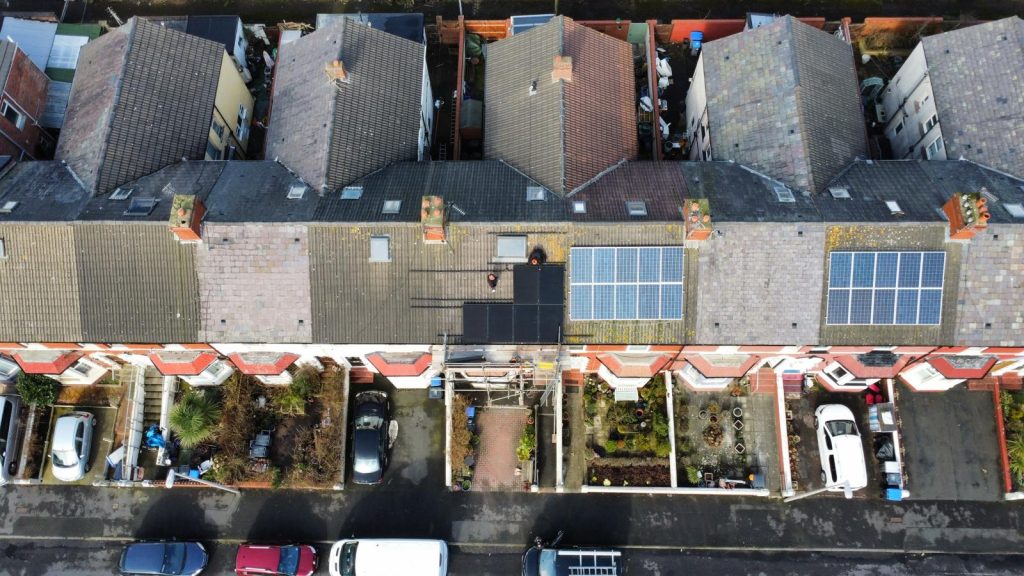
Does Roof Direction Affect Solar Performance?
Roof direction plays a key role when considering a roof suitable for solar panels.
South facing roofs typically produce the highest annual output because they receive the most consistent sunlight throughout the day. However, east and west facing roofs also offer excellent performance.
East facing panels generate more electricity in the morning, while west facing panels produce more in the afternoon and evening. As a result, some homeowners choose a split system across both sides of the roof to balance energy generation throughout the day.
North facing roofs usually produce less electricity. However, in some cases, they may still contribute to overall generation depending on the system design.
A solar survey will assess roof direction and recommend the best layout for your property.
Thinking About Solar Panels for Your Home?
Our team installs solar PV systems across Blackpool and the surrounding areas. If you are considering solar panels, we can assess whether your roof is suitable for solar panels and design a system around your property.
How Does Shading Impact a Roof Suitable for Solar Panels?
Shading can affect how suitable a roof is for solar panels. Therefore, installers always assess potential obstructions during a survey.
Common sources of shading include chimneys, nearby buildings, trees and roof features. Even small amounts of shading can reduce system performance if not considered during design.
However, modern solar systems can reduce the impact of shading. Technologies such as optimisers and microinverters allow panels to operate more independently. As a result, shading on one panel does not always affect the entire system.
Because of this, many roofs that appear partially shaded can still be suitable for solar panels when designed correctly.
Can Flat Roofs Be Suitable for Solar Panels?
Flat roofs can still be a roof suitable for solar panels when installed correctly.
Installers use mounting systems to position panels at an angle, which helps maximise sunlight exposure. These systems also include calculations for wind load and ballast to ensure safety and stability.
Flat roof installations often allow flexibility in panel positioning. This means systems can be designed to achieve the best possible orientation.
As a result, many commercial buildings and some domestic properties benefit from flat roof solar systems.

How Much Roof Space Do I Need?
Roof space plays an important role when determining whether a roof suitable for solar panels can support your energy needs.
A typical solar panel measures around 1.7 metres by 1 metre. Therefore, a standard domestic system may require between 10 and 20 panels depending on the desired system size.
For example, a 4 kilowatt system may require around 10 panels, while a larger system will require more space. However, system size should always match household electricity usage.
A professional survey will assess available roof space and recommend the most suitable system size for your home.
Why an Initial Assessment Is Important
Although many homes have a roof suitable for solar panels, each property still needs to be assessed before installation.
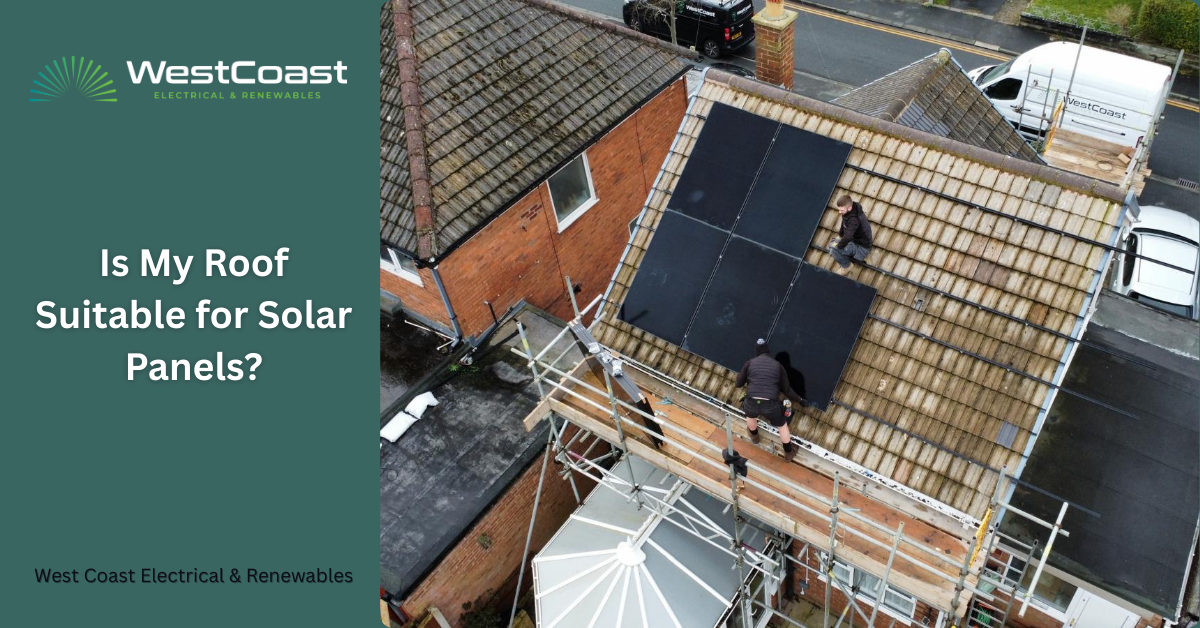
In many cases, our team can review properties using tools such as mapping software and aerial imagery to plan system layouts and provide initial quotes. This allows customers to move forward quickly without needing a site visit straight away.
Once the job is booked, we carry out a full assessment on site before installation begins. At this stage, we confirm roof structure, electrical setup, shading and final system design. This ensures everything is installed safely and performs as expected.
West Coast Electrical and Renewables installs solar PV systems, battery storage, EV chargers and air source heat pumps across Blackpool, Poulton le Fylde, Thornton Cleveleys, Lytham St Annes and the wider Lancashire area.
By assessing each property at the right stage, our team designs systems that suit both current energy use and future plans.
Want to Find Out If Your Roof Is Suitable?
If you are considering solar panels and want to know if your roof is suitable for solar panels, our team can help you take the next step.
Final Thoughts on Roof Suitability
Most properties can have a roof suitable for solar panels when the system is designed correctly.
While factors such as direction, shading and space influence performance, modern solar technology allows flexible system design. As a result, more homes than ever can benefit from solar energy.
With the right setup, solar panels can generate electricity for many years and support your household energy use.