More drivers are choosing to have an EV charger installed at home, but how much thought do you give to the person installing it?
An EV charger is not simply a product that gets fixed to the outside of your house. It forms part of your electrical installation. Therefore, the electrical supply, circuit protection, earthing arrangements, charger location and existing installation all need to be considered.
At West Coast Electrical & Renewables, we believe EV charger installation should be treated in exactly the same way as any other specialist electrical work. Our company continues to invest in EV-specific training and qualifications so that our knowledge and processes keep pace with changes across the industry.
Can anyone install an EV charger?
No. Home EV charger installation requires electrical knowledge and competence.
Electrical Safety First advises homeowners to use a registered and competent electrician who is trained and qualified to install EV charge points.
This is important because there is much more involved than mounting the charger on a wall.
A typical home charger requires a dedicated electrical circuit. The installer also needs to assess factors such as the existing supply, electrical demand, earthing arrangements and appropriate protection.
The installation must comply with the relevant requirements of BS 7671, commonly known as the IET Wiring Regulations. Depending on the installation, Building Regulations requirements and notification to the Distribution Network Operator may also apply.
So, although you may see EV charger installation advertised by general tradespeople, it is important to check who will actually complete the electrical work and whether they have the appropriate competence to do it.

Why EV specific qualifications now matter even more
The electrical industry continues to develop alongside EV technology.
On 1 October 2026, changes to the Electrotechnical Assessment Specification came into effect. The EAS sets competence requirements used by certification bodies within the electrotechnical industry.
The updated requirements introduced additional Level 3 qualification requirements for certain low carbon technologies, including electric vehicle charging equipment.
For certified businesses affected by these requirements, relevant Qualified Supervisors and employed people undertaking this work need to hold an accepted Level 3 qualification appropriate to the technology.
It is important to put this into context. This does not mean that a new law simply states that every EV charger installer in the UK must hold one specific EV certificate.
However, it does demonstrate how the industry is strengthening the competence requirements surrounding EV charger installation.
At West Coast Electrical & Renewables, we have continued to invest in this area. Our business has recently completed further Level 3 EV charging training, including the LCL Awards Level 3 Award in the Installation and Commissioning of Electric Vehicle Charging Equipment in Domestic, Commercial and Industrial Locations.
The qualification covers areas including preparation and design, installation, inspection, testing, initial verification and customer handover.
For us, continued training is part of making sure our business keeps up with the electrical and renewable industries as they develop.

What should happen before an EV charger is fitted?
Before installation begins, the electrical requirements of the property need to be considered.
For example, the installer may need to look at the existing electrical supply, consumer unit, available capacity, earthing arrangements and proposed charger load.
The charger location matters too. Cable routes, parking position and the distance between the vehicle and charger can all affect the installation.
In addition, the installer needs to determine the correct process with the local Distribution Network Operator, known as the DNO.
Some installations can follow a connect and notify process. However, other installations may require an application before the charger can be connected.
These are all parts of the job that customers may never see when looking at the finished charger on the wall.
Which EV charger should you choose?
Once the electrical side has been considered, there is another decision to make: the charger itself.
There is no single EV charger that suits every customer. Some people want a permanently attached cable for convenience. Others prefer an untethered charger for a neater appearance. Smart controls, design, cable length and the style of the property can also influence the decision.
At West Coast Electrical & Renewables, we currently install Hypervolt, Easee and Simpson & Partners chargers.
| Charger | Why you might choose it | Style |
|---|---|---|
| Hypervolt | A feature rich smart charger with a tethered charging cable and app controls | Modern design with different colour options |
| Easee | A compact option that works particularly well for customers who prefer an untethered charger | Small and discreet |
| Simpson & Partners | Ideal when the appearance and finish of the charger are particularly important | Premium design with a wide choice of finishes |
Hypervolt
Hypervolt is a popular choice for customers who want a tethered home charger.
Having the charging cable permanently attached can make everyday charging convenient. Hypervolt chargers also offer smart functionality through the Hypervolt app, allowing customers to manage and schedule charging.
Different cable lengths are available too, which can be useful where the charger cannot be positioned immediately next to the vehicle.
Easee
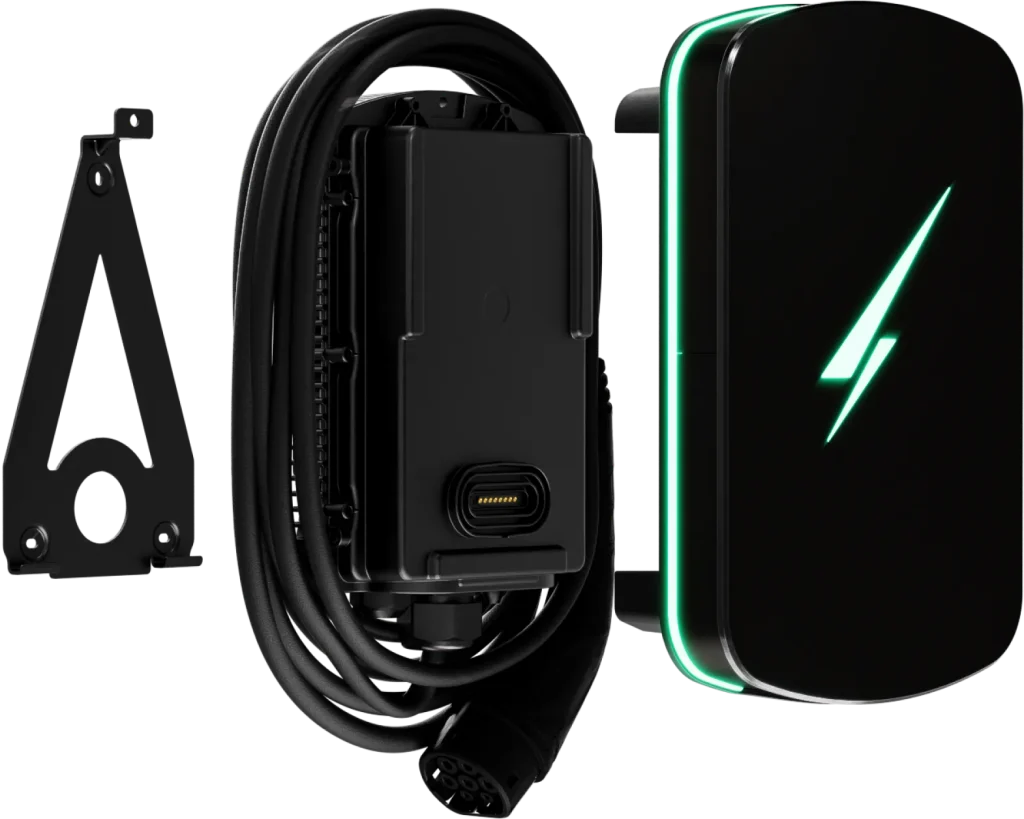
Easee offers a very different design.
Its compact charging unit works particularly well for customers who want an untethered charger. Instead of having a permanently attached charging cable, you can connect a compatible cable when you need to charge.
Easee also provides smart functionality through its app, including charging control and monitoring.

Simpson & Partners
For some homes, the appearance of the charger is almost as important as its functionality.
Simpson & Partners chargers offer a wide range of finishes and design combinations, making them particularly suited to customers who want their charger to complement the exterior of their property.
They also provide smart charging functionality, so choosing a more design focused charger does not mean giving up useful technology.

What certification should you receive after an EV charger installation?
The work does not finish when the charger switches on.
The electrical installation needs to be correctly inspected and tested. Where a new circuit has been installed, the appropriate electrical certification should also be provided.
Domestic electrical work may also need to be notified under Part P of the Building Regulations.
The installer should also deal with the appropriate DNO process for the EV charger.
Therefore, when comparing EV charger quotations, it is worth looking beyond the price of the charger itself.
Ask what electrical work is included. Check who will complete the installation. Also, make sure the quotation includes the necessary testing, certification and relevant notifications.
Choosing an EV charger installer in Blackpool
West Coast Electrical & Renewables provides EV charger installation across Blackpool, Poulton-le-Fylde, Thornton-Cleveleys, Lytham St Annes, Preston and surrounding areas of Lancashire.
As an NICEIC registered electrical contractor, we already work across domestic and commercial electrical installations. EV charging forms part of that wider electrical expertise.
We also continue to invest in additional EV and renewable energy training as technologies and industry requirements develop.
Most importantly, we do not believe choosing an EV charger should simply be about finding a box to put on the wall.
The charger needs to suit your vehicle and how you want to use it. Meanwhile, the electrical installation behind it needs just as much consideration.
Whether you are interested in Hypervolt, Easee or Simpson & Partners, our team can help you look at the available options and arrange the electrical installation for your property.