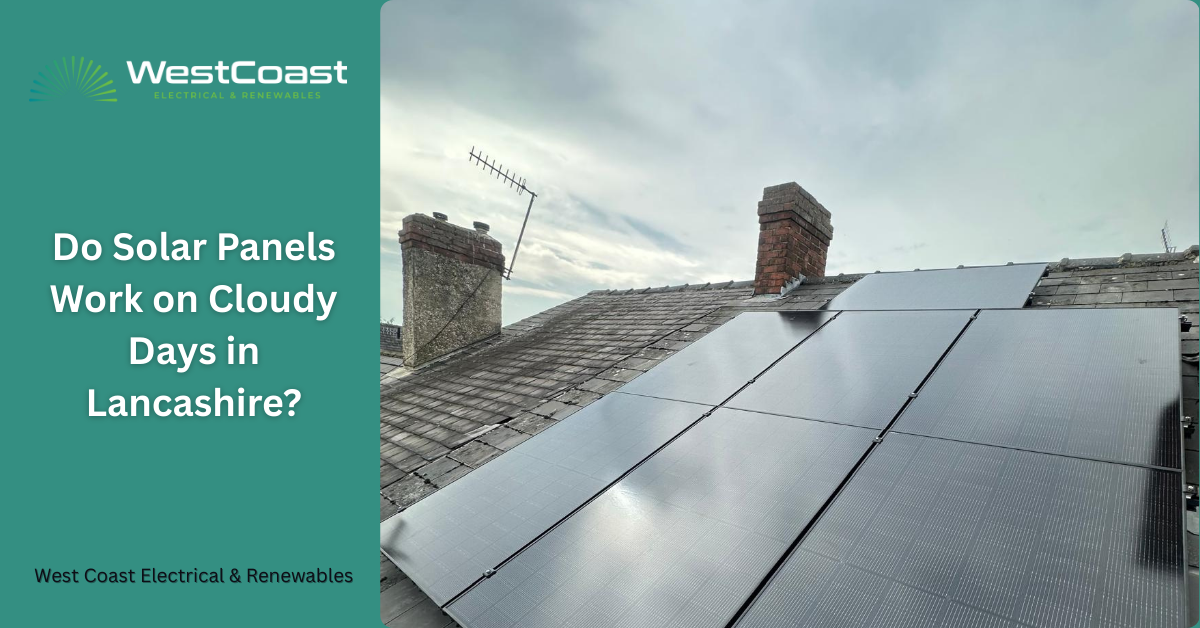
A common question we hear from homeowners is do solar panels work on cloudy days, especially in areas like Lancashire, where overcast weather is part of everyday life. The short answer is yes. Solar panels still generate electricity on cloudy days, although output is lower than on bright sunny days.
Understanding how solar panels work and what affects their performance can help set realistic expectations and show why solar remains a worthwhile investment in Lancashire.
How Solar Panels Generate Electricity
Solar panels generate electricity using daylight, not heat. This is an important distinction. Panels work by converting light particles from the sun into usable electricity through photovoltaic cells.
Even when the sky is cloudy, daylight still reaches your roof. Clouds reduce the intensity of sunlight, but they do not block it completely. As a result, solar panels continue to generate power throughout the day.
On heavily overcast days, output may drop to around 10 to 30 percent of peak generation. However, this still contributes to your household energy use and reduces the amount of electricity you need to import from the grid.
Do Solar Panels Work on Cloudy Days in Lancashire?
Yes, solar panels work on cloudy days in Lancashire, and systems are designed with local conditions in mind.
Lancashire does not receive the same sunshine levels as southern parts of the UK, but it still gets more than enough daylight for solar panels to perform effectively over the course of a year. In fact, modern solar panels are far more efficient than many people realise.
The key is correct system design. Panel positioning, roof orientation, inverter selection and overall system size all play an important role in maximising generation in typical Lancashire weather.
How Much Power Do Solar Panels Produce in Cloudy Weather?
Solar panel output varies depending on cloud cover, time of year and daylight hours.
During summer, even cloudy days often provide strong generation because daylight hours are long. In winter, output is naturally lower due to shorter days, but panels still produce electricity whenever there is daylight.
Over a full year, the energy generated during brighter months usually outweighs the reduced winter output. For this reason, it makes more sense to consider solar performance over a full year rather than day by day.
Why Solar Panels Still Make Sense in the North West
Homeowners across the North West, including Lancashire, Cumbria and Greater Manchester, install solar panels widely. If cloudy weather made solar ineffective, these systems would not perform as well as they do.
There are several reasons why solar still makes sense locally:
• Energy prices remain unpredictable
• Solar reduces reliance on the grid
• Modern panels perform well in low light
• Systems are designed for UK conditions
When combined with battery storage, solar energy can be used more efficiently regardless of daily weather changes.

The Role of Battery Storage on Cloudy Days
Battery storage can significantly improve how solar energy is used, especially during cloudy periods.
On brighter days, excess energy generated by your solar panels can be stored in a battery rather than exported to the grid. That stored energy can then be used later when generation is lower, such as during cloudy afternoons or evenings.
Battery storage does not increase how much energy your panels generate, but it does help you make better use of what you generate. This can be particularly beneficial in Lancashire where weather conditions can change quickly.
Does Rain Affect Solar Panel Performance?
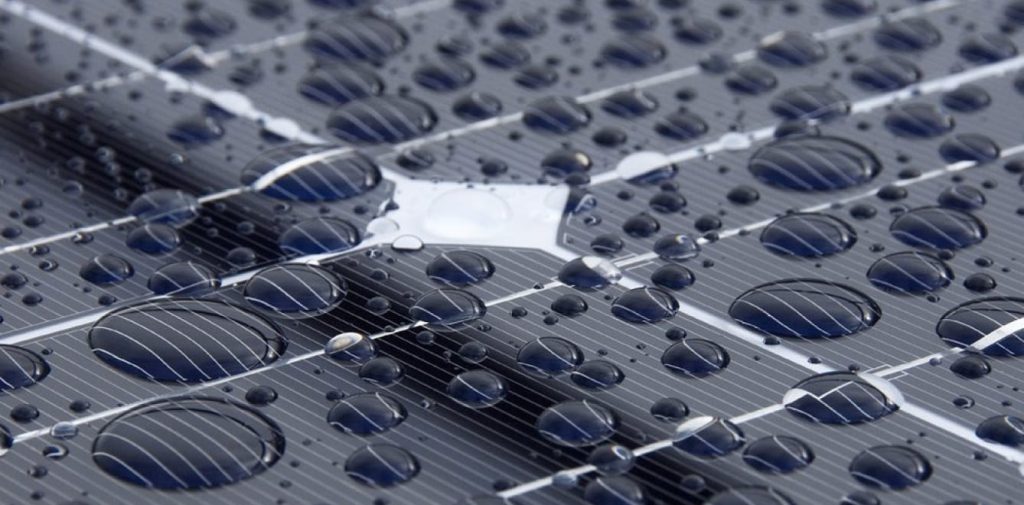
Rain does not stop solar panels from working. In fact, rain can actually help keep panels clean by washing away dirt and dust that may reduce efficiency.
As long as there is daylight, panels will continue to generate electricity. Heavy rain combined with thick cloud cover may reduce output, but it does not stop generation entirely.
Solar system designs take UK weather conditions into account, including rain, wind and cold temperatures.
What Matters More Than Sunshine
While sunshine levels are important, several other factors have a bigger impact on solar performance:
• Roof direction and angle
• Shading from trees or nearby buildings
• Quality of solar panels
• Inverter performance
• Overall system size
A well designed system in Lancashire will always outperform a poorly designed system in a sunnier location.
This is why choosing the right installer is just as important as choosing the panels themselves.
Is Solar Still Worth It in Lancashire?
For most homes, yes. Solar panels work on cloudy days and continue to generate electricity throughout the year in Lancashire.
While output is lower in winter and on heavily overcast days, solar panels still contribute towards your energy usage and reduce your reliance on the grid. Over time, this can lead to meaningful savings and improved energy independence.
Solar works best when expectations are realistic and homeowners choose a system that suits their property and household.
Speak to a Local Solar Installer in Lancashire
If you are considering solar panels and want honest advice based on real-world performance in Lancashire, it is important to speak with an experienced local installer.
At West Coast Electrical & Renewables, we design solar and battery systems based on actual usage, roof layout and future plans, not generic estimates.