If you have noticed your electricity usage increasing as the colder and darker months arrive, you are certainly not alone. Electricity usage in winter can increase for several reasons. We spend more time indoors, use lighting for longer and often rely on more electrical appliances throughout the day.
November is usually when many households really start to notice the change. The evenings are darker, temperatures have dropped and heating systems are working harder. Meanwhile, electric vehicles, tumble dryers and other high energy appliances can add to overall demand.
Understanding where your electricity is going can help you make informed decisions about how you use energy at home. It can also help you decide whether technologies such as solar panels and battery storage could form part of your longer-term energy plans.
Why does electricity usage in winter increase?
There is rarely one single reason for higher winter electricity consumption. Instead, lots of smaller changes around the home can add up.
Lighting is an obvious example. During summer, many homes need very little artificial lighting until later in the evening. By November, however, lights may be switched on from late afternoon.
We also spend more time indoors during colder weather. As a result, televisions, computers, games consoles, kitchen appliances and other electrical equipment may be used for longer.
In addition, households may use tumble dryers more frequently because drying clothes outside becomes difficult. Electric heaters, heated blankets and other seasonal appliances can also contribute to increased consumption.
Therefore, even if your routine has not changed dramatically, your overall electricity usage may still rise.
Heating can affect your electricity consumption too
Your heating system can also influence winter electricity demand, even if you heat your home using gas.
Boilers still require electricity to operate components such as controls and pumps. Smart thermostats and other heating controls also use electricity.
For homes with electric heating or an air source heat pump, the relationship is even more direct.
An air source heat pump uses electricity to transfer heat from the outside air into your home. Therefore, electricity consumption will naturally change depending on heating demand, outside temperature, the efficiency of the property and how the system has been designed and operated.
This is one reason why proper system design is so important when considering an air source heat pump.

Are you using more electricity without realising?
Sometimes the increase in electricity usage in winter comes from appliances that do not immediately stand out.
A tumble dryer, for example, may suddenly be running several times each week. Meanwhile, additional lighting could be switched on for five or six hours each evening.
Then there are smaller changes. You may use the kettle more frequently, cook more hot meals at home or spend additional evenings watching television.
Individually, these changes may not seem significant. Together, however, they can make a noticeable difference to household consumption.
Checking your smart meter or energy supplier app can be useful here. Rather than only looking at the cost in pounds, look at your actual electricity consumption in kilowatt hours.
That gives you a much better idea of whether your household is genuinely using more electricity.
Can solar panels help with winter electricity usage?
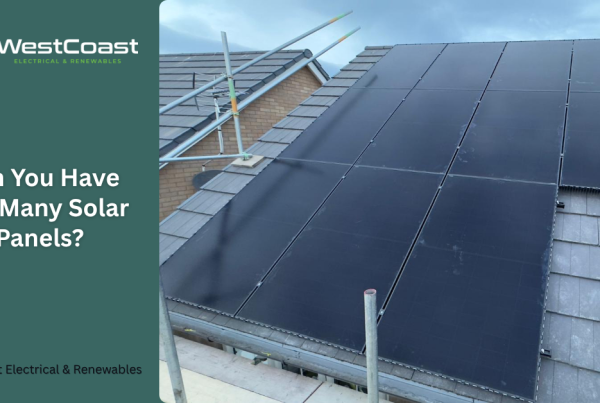
Solar panels continue to generate electricity throughout the winter because photovoltaic panels use light to produce electricity rather than heat.
However, it is important to have realistic expectations.
Shorter daylight hours mean a solar PV system will generally generate less electricity during winter than it does during the longer days of spring and summer. Cloud cover, shading, roof orientation and the size of the system will also affect generation.
For this reason, solar should normally be considered based on expected generation across the year rather than its performance on one dark November day.
When properly designed, a solar PV system can provide renewable electricity for use within your property throughout the year. However, the amount generated will vary from day to day and season to season.
What role does battery storage play during winter?
Battery storage can give households more control over when they use electricity.
When a battery is installed alongside solar panels, excess solar generation can be stored rather than immediately exported to the grid. That stored electricity can then be used later when the property needs it.
However, solar generation is lower during winter, so there may be less excess energy available to store.
This does not necessarily mean a home battery becomes redundant during the colder months.
Some battery systems can charge from the grid. Therefore, customers on suitable time of use electricity tariffs may choose to charge their battery when electricity is cheaper and use that stored electricity during a more expensive period.
Whether this makes financial sense depends on your tariff, battery system, electricity consumption and charging strategy.
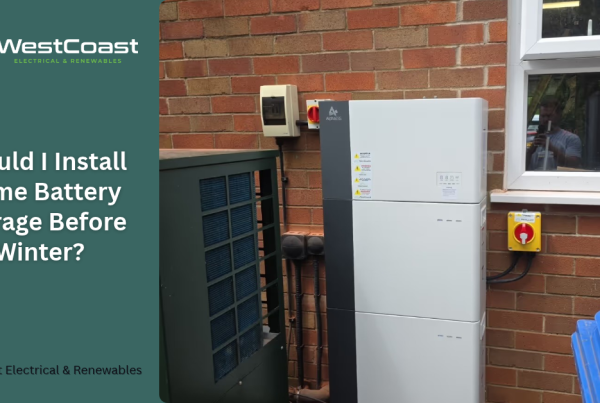
At West Coast Electrical & Renewables, we regularly install AlphaESS battery storage systems. We assess the property and its energy requirements before recommending a system because battery capacity should reflect how the household actually uses electricity.
What about charging an electric vehicle in winter?
If you have recently bought an electric vehicle, home charging can become another significant part of your household electricity consumption.
Again, this does not necessarily mean something is wrong when your electricity usage increases. You are simply moving some of the energy used for transport from petrol or diesel to electricity.
The time you charge can also matter.
Many modern EV chargers offer scheduled and smart charging features. Depending on your electricity tariff, this may allow you to schedule charging during cheaper periods.
West Coast Electrical & Renewables installs a range of home EV chargers, including Hypervolt, Easee, and Simpson & Partners. The right charger will depend on the vehicle, property, electrical installation and the features you want to use.

Could your electrics be contributing to unnecessary energy use?
Higher electricity consumption does not automatically mean there is a problem with your electrical installation.
However, winter is a useful time to look around your property and consider how electricity is being used.
Older lighting is one area worth checking. Modern LED lighting generally uses considerably less electricity than traditional incandescent lighting while providing the same amount of useful light.
Controls can also make a difference. Timers, sensors and smart controls can help prevent certain lights or appliances from being left on unnecessarily.
Most importantly, if you notice a sudden or unexplained increase in electricity consumption, do not assume winter alone is responsible.
If something does not look right, further investigation may be worthwhile.
Look at your home as a complete energy system
One of the biggest changes in modern homes is the number of electrical technologies now working together.
A property might have solar panels generating electricity, a battery storing energy, an EV charger adding demand and a heat pump providing heating.
As a result, simply looking at one piece of equipment does not always give you the full picture.
A well designed home energy system should consider when electricity is generated, when it is used and when it may be beneficial to store it.
For example, a household that is empty for most of the working day will have a very different energy profile from someone who works from home. Likewise, a family with an electric vehicle and heat pump will have different requirements from a property with lower electricity consumption.
That is why we look at individual properties and energy requirements rather than recommending the same system to everyone.
Is higher winter electricity usage normal?
For many households, yes. Some increase in electricity usage in winter can be expected as the days become shorter and we spend more time at home.
However, understanding your consumption is more useful than simply accepting a higher bill.
Check how many kilowatt hours you are using. Compare this with previous months and, if possible, the same period last year. Then consider what has changed around the home.
Have you started using the tumble dryer more frequently? Are lights on for longer? Have you recently bought an EV? Are you using electric heating? Has someone started working from home?
Often, the answer becomes much clearer once you look at how your household routine changes during winter.
Making your home ready for higher winter energy demand
Winter puts different demands on our homes, but it is also a good opportunity to understand how energy is being used.
Solar PV, battery storage, EV charging and air source heat pumps can all form part of a modern home energy system. However, each property is different, so good system design matters.
West Coast Electrical & Renewables provides electrical and renewable energy services across Blackpool, Poulton-le-Fylde, Thornton-Cleveleys, Lytham St Annes, Preston and surrounding areas.
Whether you are considering solar panels, battery storage, an EV charger, an air source heat pump or simply want advice about your electrical installation, our team can assess your property and discuss the options available.