
Many homeowners ask the same question when they begin researching renewable energy. Can solar panels power whole house energy needs?
Solar technology has improved significantly over the last decade. As a result, modern solar systems can generate a large portion of the electricity a home uses. However, several factors influence whether solar panels can cover all of a property’s energy demand.
Roof size, panel output, household energy usage and battery storage all play an important role. Therefore, the answer often depends on how the system is designed and how the household uses electricity throughout the day.
Understanding how solar generation works can help homeowners set realistic expectations and make informed decisions when investing in renewable energy.
How Much Electricity Does a Typical Home Use?
To understand whether solar panels power whole house energy demand, it helps to first consider how much electricity a home uses.
In the UK, the average household electricity consumption is often around 2700 to 3500 kilowatt hours per year. However, usage can vary significantly depending on property size, appliances and lifestyle.
For example, homes with electric vehicles, air source heat pumps or electric heating systems often use more electricity. On the other hand, smaller households may use much less energy.
Because energy usage varies so widely, solar systems should always be designed around the specific needs of each property.
How Much Electricity Can Solar Panels Generate?
Solar panels generate electricity from daylight rather than heat. Therefore, they can produce energy even on cloudy days.
A typical domestic solar installation in the UK ranges between 3 kilowatts and 6 kilowatts. Depending on roof orientation and system size, this type of installation can generate roughly 2500 to 5000 kilowatt hours of electricity per year.
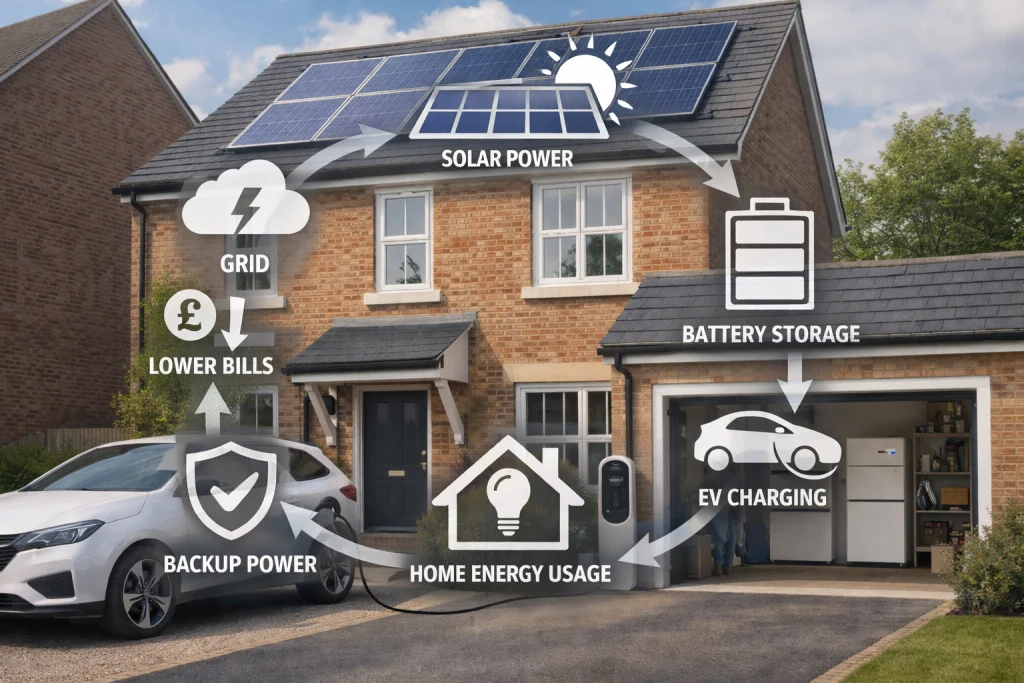
Because of this output range, solar panels can often cover a large portion of a household’s electricity demand. However, solar generation does not always match when electricity is used.
Solar panels usually produce the most electricity during the middle of the day. In contrast, many homes use more electricity in the morning and evening. As a result, some solar energy may be exported to the grid when the property is not using it.
Thinking About Installing Solar Panels?
Our team installs solar PV systems across Blackpool and the surrounding areas. If you are considering solar panels for your home, we can assess your roof and design a system that suits your energy usage.
The Role of Battery Storage
Battery storage can play an important role when homeowners want solar panels power whole house energy use more effectively.
Without a battery, any excess solar energy generated during the day usually exports to the grid. However, a solar battery allows that energy to be stored and used later.
For example, a solar system may generate surplus electricity during the afternoon when nobody is home. Instead of exporting that electricity, the battery stores it. Later in the evening, the home can use the stored energy when electricity demand increases.
Many homeowners choose battery storage because it helps increase the amount of solar energy used within the home.
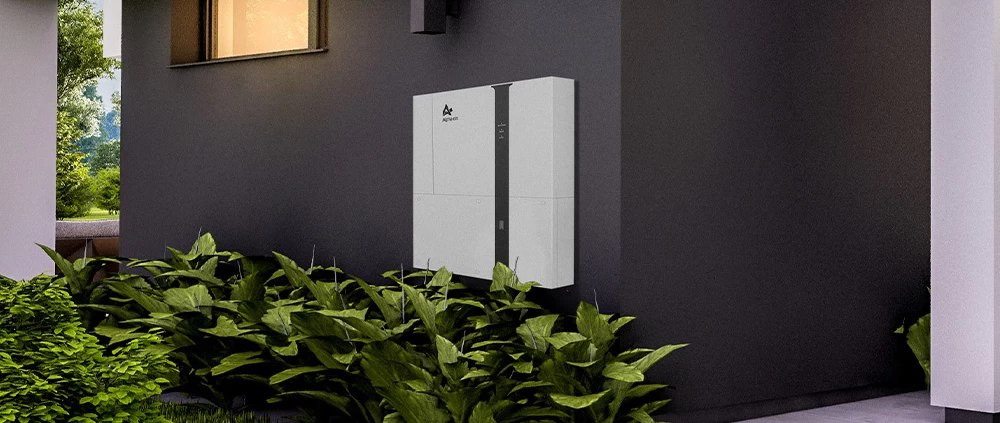
West Coast Electrical and Renewables installs a range of battery systems depending on the property and system design. However, many customers choose AlphaESS battery systems because they provide flexible storage capacity and reliable performance. In addition, Tesla Powerwall remains a popular option that many homeowners request.
When Can Solar Panels Power Most of a Home?
In some situations, solar panels power whole house electricity demand for large parts of the year.
This is more likely when:
• The property has enough roof space for a larger solar system
• The household electricity usage is relatively low
• Battery storage is installed
• Energy consumption aligns well with solar generation
During spring and summer months, solar panels often generate significant electricity throughout the day. As a result, many homes can rely heavily on solar energy during these seasons.
However, solar generation naturally decreases during winter due to shorter daylight hours. Therefore, most homes still rely on some grid electricity during colder months.
Even so, solar panels can still contribute to household energy use throughout the year.
How System Design Makes the Difference
Careful system design plays a key role when homeowners want solar panels power whole house energy needs as much as possible.
Several factors influence solar performance, including:
• Roof direction and angle
• Shading from nearby buildings or trees
• Panel efficiency and system size
• Household electricity demand
• Future plans such as EV charging or heat pumps
A professional survey helps determine how a solar system will perform at a specific property. This assessment allows installers to design systems that maximise generation and efficiency.
West Coast Electrical and Renewables installs solar PV systems, battery storage, EV chargers and air source heat pumps across Blackpool, Poulton le Fylde, Thornton Cleveleys, Lytham St Annes and the wider Lancashire area.
By assessing each property’s energy usage and roof space, our team designs renewable systems that support both current and future energy needs.

Interested in Solar Panels for Your Home?
If you would like to learn more about solar panels, battery storage or renewable energy systems, our team can help you explore the best options for your property.


