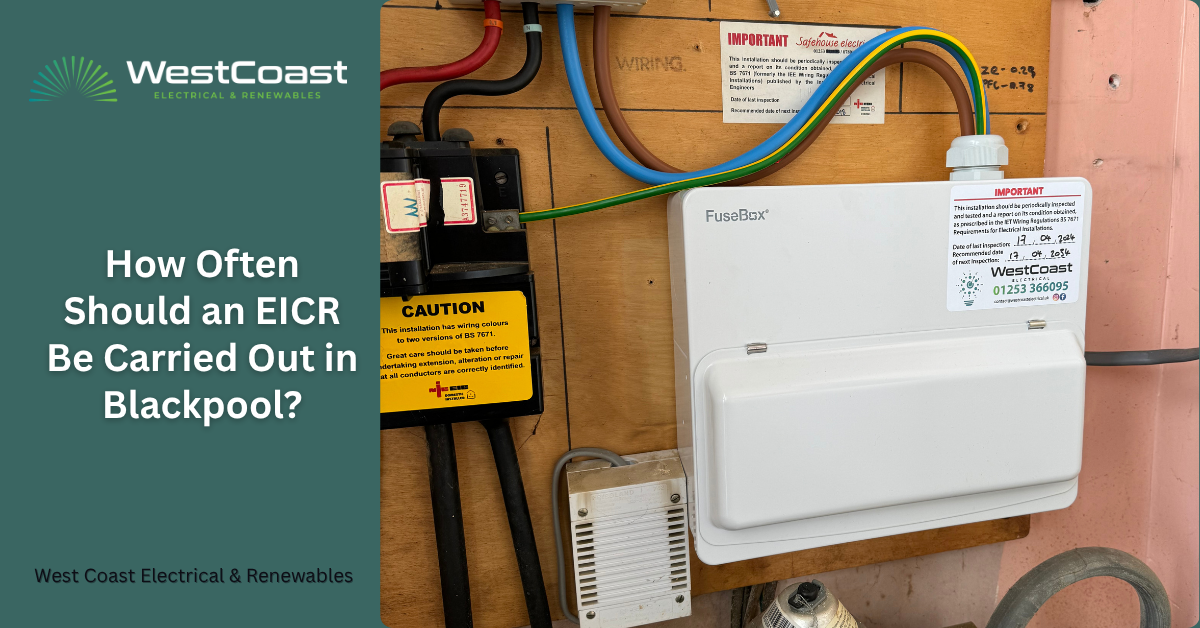
If you’re wondering how often should an EICR be carried out, you’re not alone. Whether you own your home, rent out a property or manage a commercial building, regular electrical inspections are an important part of keeping the installation safe.
An Electrical Installation Condition Report, commonly known as an EICR, checks the condition of your property’s electrical system. During the inspection, an electrician tests circuits, wiring, sockets, switches and the consumer unit to identify any damage, wear or potential safety concerns.
At West Coast Electrical & Renewables, we carry out EICRs across Blackpool and the surrounding areas for homeowners, landlords and businesses.
How often should an EICR be carried out?
The recommended inspection frequency depends on how the property is used.
For most properties, the general guidance is:
- Owner occupied homes: Every 10 years or when buying or selling a property.
- Rental properties: At least every 5 years or at the start of a new tenancy if required.
- Commercial premises: Usually every 5 years, although some environments require more frequent inspections.
- Industrial premises: Often every 3 years depending on the type of installation and usage.
The electrician carrying out your inspection may also recommend a shorter interval if the installation is older or if any concerns are identified.
Why are regular EICRs important?
Electrical installations naturally deteriorate over time. Cables age, accessories wear out and previous alterations may no longer comply with current regulations.
Regular inspections help identify issues before they become more serious.
An EICR can highlight:
- Damaged or deteriorated wiring.
- Overloaded circuits.
- Faulty sockets or switches.
- Problems with earthing and bonding.
- Missing or incorrect circuit protection.
- Signs of overheating.
- Previous DIY electrical work that may not meet current standards.
Finding these issues early often makes repairs simpler and can help prevent unexpected electrical faults.
Do homeowners legally need an EICR?
Unlike rental properties, homeowners are not legally required to have regular EICRs.
However, that does not mean they are unnecessary.
Many homeowners choose to have an EICR if:
- The property is over 10 years old.
- They have recently purchased the property.
- They are planning renovation work.
- They have noticed electrical issues.
- They want reassurance that the installation remains safe.
An inspection provides an independent assessment of the electrical installation and can identify issues that are not immediately visible.

Thinking about buying a property?
An EICR before purchasing a home can provide valuable information about the condition of the electrical installation. It may also highlight work that should be factored into your budget before completing the purchase.
At West Coast Electrical & Renewables, we regularly carry out pre purchase electrical inspections across Blackpool to help buyers make informed decisions.
EICRs for landlords
For landlords, electrical safety responsibilities are much clearer.
In England, privately rented properties must have the electrical installation inspected and tested at least every five years by a qualified electrician. A copy of the report must also be provided to tenants and retained for future reference.
If remedial work is identified, it should be completed within the timescales stated on the report.
Keeping inspections up to date helps landlords remain compliant while providing reassurance for tenants.
What happens during an EICR?
Many customers expect an EICR to involve only a quick visual inspection. In reality, it is a detailed assessment of the electrical installation.
During the inspection, the electrician will:
- Inspect the consumer unit.
- Test every electrical circuit.
- Check protective devices.
- Test earth fault protection.
- Inspect sockets, switches and lighting circuits.
- Check earthing and bonding arrangements.
- Identify any damaged or deteriorated components.
- Record observations and test results.
Once complete, you will receive a detailed report explaining the condition of the installation and whether any remedial work is recommended.
Understanding the EICR observations
Your report may include observation codes.
These generally include:
C1 – Danger present. Immediate action required.
C2 – Potentially dangerous. Urgent remedial work required.
C3 – Improvement recommended. The installation is not unsafe, but improvements are advised.
FI – Further investigation required before the installation can be considered satisfactory.
Your electrician will explain any observations and advise on the most appropriate next steps.

Signs you should not wait for your next inspection
Even if your recommended inspection date has not arrived, you should arrange an electrical inspection if you notice:
- Frequent tripping of the consumer unit.
- Flickering lights.
- Burning smells.
- Discoloured sockets.
- Buzzing switches.
- Electric shocks from appliances or accessories.
- Signs of overheating around electrical equipment.
These symptoms should always be investigated by a qualified electrician.
Why choose West Coast Electrical & Renewables?
Our experienced electricians carry out EICRs for domestic, commercial and rental properties throughout Blackpool.
We provide clear reports, explain our findings in straightforward language and only recommend work where it is genuinely needed. Whether you require an inspection before purchasing a property, need to meet landlord requirements or simply want peace of mind, we are here to help.

Book an EICR in Blackpool
If you’re still asking how often should an EICR be carried out, the answer depends on your property and how it is used. Regular inspections are one of the best ways to ensure your electrical installation remains safe and continues to meet current standards.
If you’re based in Blackpool or the surrounding areas and would like to arrange an EICR, our team at West Coast Electrical & Renewables will be happy to help.