
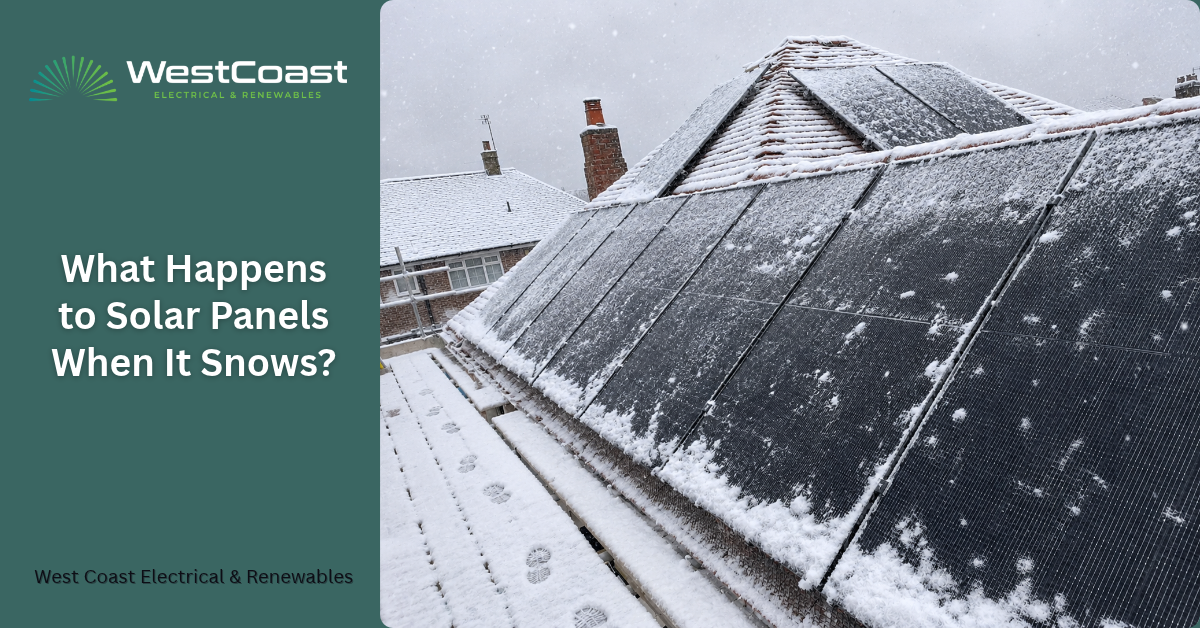
As temperatures drop across the UK, you might wonder what happens to solar panels in snow. Do they stop generating electricity? Can cold weather damage them? And should you try to clear snow from your solar panels yourself?
Solar panels continue to work throughout winter. In fact, solar PV panels rely on daylight rather than heat to generate electricity. However, shorter days, lower light levels and snow covering the panels can all affect how much electricity your system produces.
For homeowners considering solar panels in Blackpool, Poulton-le-Fylde, Thornton Cleveleys, Lytham St Annes and across Lancashire, understanding winter solar performance can help you know what to expect from a system throughout the year.
Do Solar Panels Work in Snow?
Yes, solar panels can work when there is snow around. However, if snow completely covers the surface of a solar panel, it can temporarily prevent sunlight from reaching the solar cells.
As a result, electricity generation from the covered panels may reduce significantly or stop until enough of the snow has cleared.
However, that does not mean cold weather itself is a problem for solar panels. Solar PV systems generate electricity from light, not heat. Therefore, a bright, cold winter day can still provide useful solar generation.
Your overall generation will usually be lower during winter than during summer. This is mainly because winter brings shorter days and generally lower levels of solar radiation.
Does Cold Weather Stop Solar Panels Working?
Cold temperatures do not stop a solar PV system from generating electricity.
In fact, photovoltaic panels can operate efficiently at lower temperatures. High panel temperatures can reduce the efficiency of solar cells, so cold weather itself is not necessarily a disadvantage.
The bigger difference during a UK winter comes from the amount of available daylight.
During December and January, the days are considerably shorter than they are during June and July. The sun also sits lower in the sky. Consequently, you should expect your solar generation to vary considerably throughout the year.
This seasonal difference should form part of the original system design and estimated annual generation.
What Happens If Snow Covers Your Solar Panels?
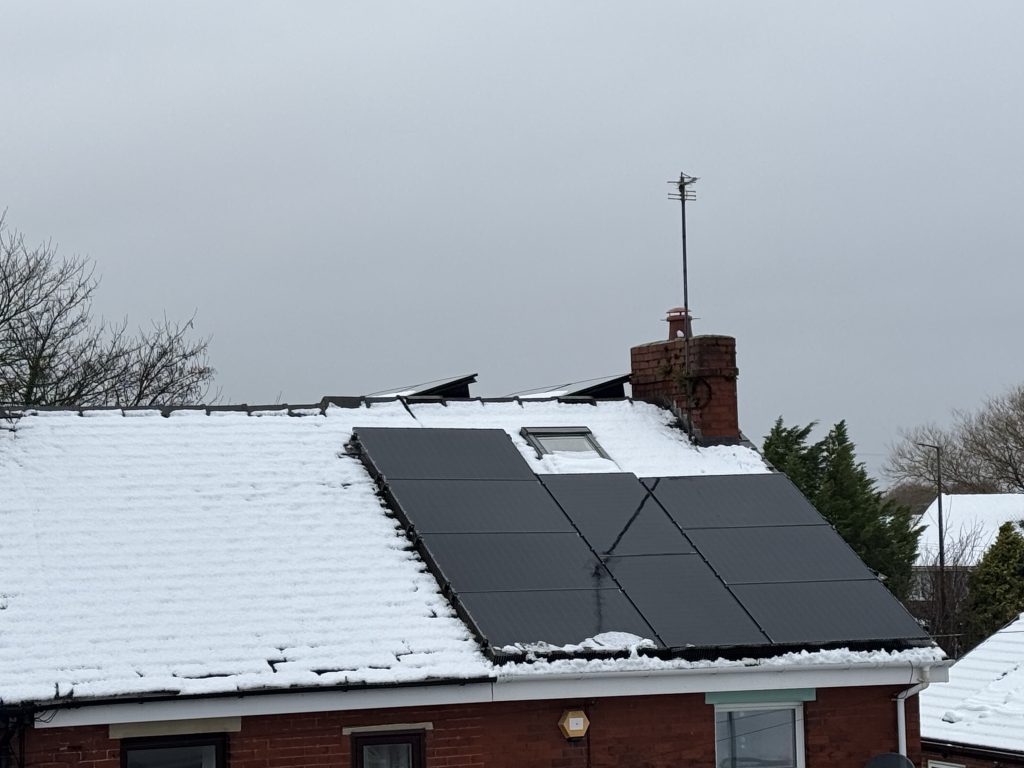
If we do get a period of snowfall in Lancashire, snow may settle on roof mounted solar panels.
A light covering may clear relatively quickly, particularly if the panels are installed on a pitched roof. Because solar panels have a smooth glass surface, snow can slide away as conditions change.
However, heavier snow may remain for longer.
While a panel remains completely covered, it cannot receive the same level of light. Therefore, generation may temporarily reduce.
This is different from saying that solar panels do not work in winter. Once the snow clears and light reaches the panels again, the system can continue generating normally.
Should You Remove Snow From Solar Panels?
In most domestic situations, we would not recommend climbing onto a roof to remove snow from solar panels.
Working at height presents a significant safety risk, particularly when roofs, ladders and surrounding surfaces may be wet, icy or slippery.
Furthermore, using unsuitable tools to scrape or brush the panels could potentially damage the glass or other components.
For most homeowners, the safest option is simply to allow the snow to clear naturally. In the UK, prolonged heavy snow cover is less common than in many colder climates, so this is unlikely to affect a typical solar system for long periods each year.
If you are concerned about your solar PV system after particularly severe weather, speak to a suitably qualified solar professional rather than attempting to access the roof yourself.
Can Frost Damage Solar Panels?
Seeing a layer of frost across solar panels on a winter morning can look concerning. However, solar PV systems are designed for outdoor installation and exposure to changing weather conditions.
Solar panels and mounting systems must be selected and installed appropriately for the property and location.
A correctly designed solar installation should take local environmental conditions into account. That includes factors such as wind loads and the structural suitability of the roof.
Therefore, occasional frost and cold temperatures should not be a reason to avoid installing solar panels in Lancashire.
Do Solar Panels Generate Less Electricity During Winter?
Generally, yes. A UK solar PV system will normally generate considerably more electricity during the spring and summer than during the darkest winter months.
However, it is important to look at solar generation across the whole year, rather than judging a system based on one day or one month.
Solar production changes constantly depending on daylight, cloud cover, shading, roof orientation, panel position and the size and design of the system.
For example, you may see relatively little generation on a dark December afternoon. On a bright spring or summer day, the same system could generate much more electricity.
This is why we assess expected annual generation when designing a solar PV system.
Can Battery Storage Help During Winter?
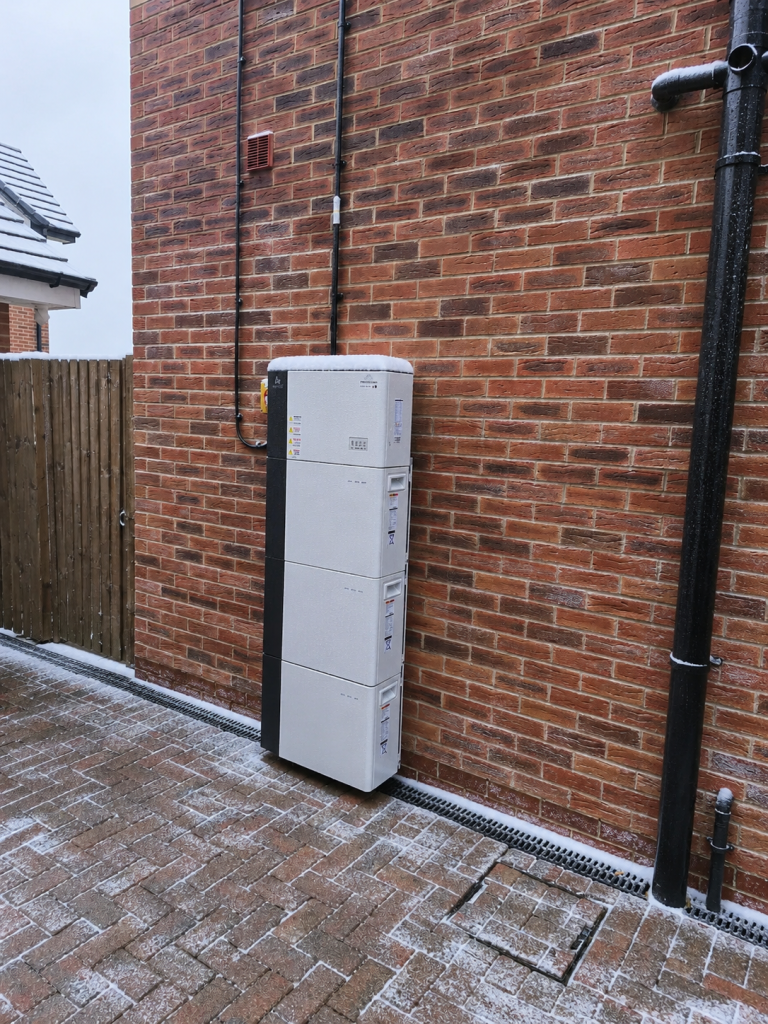
Battery storage can be a useful addition to a solar PV system, although it does not create additional solar energy.
When your panels generate more electricity than your property is using, a compatible battery system can store some of that energy for use later.
During winter, however, there may be days when there is less surplus solar energy available to store. Some battery systems can also charge from the grid. Therefore, homeowners with suitable tariffs may choose to charge their battery during cheaper electricity periods and use that stored energy later.
Whether this makes financial sense depends on your electricity tariff, energy consumption, battery system and individual circumstances.
Electricity tariffs and rates can change, so it is important to check the current terms offered by your energy supplier.
Is Solar Still Worth Considering in Winter?
You do not need to wait until spring or summer to have solar panels installed.
A solar PV system is a long term investment designed to generate electricity throughout the seasons. Therefore, the important figure is not simply how much electricity the panels produce during December. Instead, you need to consider the estimated annual generation of the complete system.
Installing during winter also means your system is already in place as daylight hours begin increasing towards spring and summer.
Most importantly, the system needs to suit your property and electricity consumption. Simply fitting as many panels as possible is not always the right approach.
A professional solar design should consider your roof, orientation, available space, shading, annual electricity usage and how you typically use energy throughout the day.
Solar Panel Installation in Blackpool and Lancashire
West Coast Electrical & Renewables installs solar PV and battery storage systems across Blackpool, Poulton le Fylde, Thornton Cleveleys, Lytham St Annes and surrounding areas of Lancashire.
We design each system around the individual property rather than using a one size fits all approach. We can assess your current electricity usage, available roof space and future energy requirements before recommending a suitable solar and battery system.
So, while solar panels in snow may temporarily produce less electricity if they become covered, snow and cold weather do not mean solar panels stop being a viable option. Solar generation naturally changes throughout the year, which is why a properly designed system considers expected performance across all seasons.

Thinking About Solar Panels?
If you are considering solar panels or battery storage for your home, West Coast Electrical & Renewables can help you understand what may work for your property.


