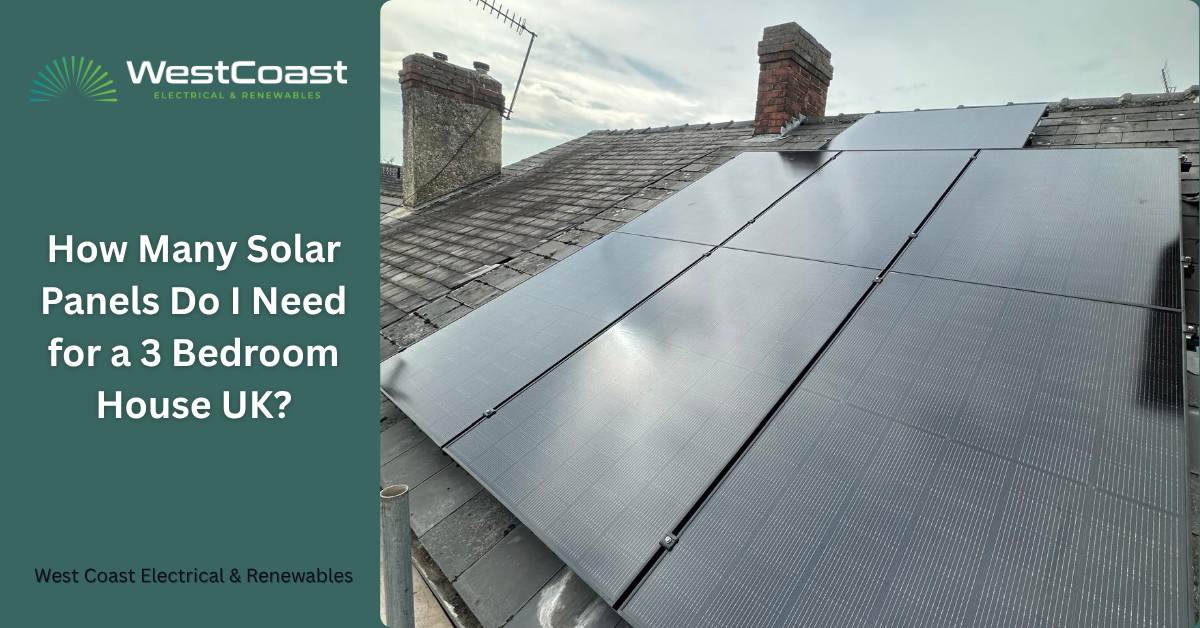
If you are researching solar energy, you may be wondering how many solar panels do I need for a 3 bedroom house Blackpool. This is one of the most common questions homeowners ask when considering solar panels, especially as energy prices continue to fluctuate across Blackpool and the UK.
The answer depends on several factors, including your electricity usage, roof space and whether you plan to add battery storage or an EV charger in the future. However, most 3-bedroom homes in Blackpool typically require between 8 and 14 solar panels.
Choosing the right system size is important because it affects both performance and long term value. For this reason, understanding your energy usage is the best place to start.
How Much Electricity Does a 3 Bedroom House Use?
In most cases, a typical 3 bedroom house in the UK uses around 2,700 to 4,500kWh of electricity each year.
However, usage can vary significantly depending on:
- Number of people living in the property
- Whether you work from home
- Electric vehicle charging
- Heating systems and appliances
- Daily energy habits
For example, a household with two people may use much less electricity than a busy family home with higher daytime demand.
As a result, solar systems should always be tailored to the property rather than using a one size fits all approach.
How Many Solar Panels Do I Need for a 3 Bedroom House UK Based on Usage?
The number of panels needed depends largely on how much electricity you want to offset.
As a general guide:
- Lower usage homes may need around 8 to 10 panels
- Average households often suit 10 to 12 panels
- Higher usage homes may benefit from 12 to 14 panels or more
Modern solar panels are also far more efficient than older models. This means homeowners can now generate more electricity using fewer panels.
In addition, panel wattage affects system size. For example, higher output panels can reduce the number of panels required while still producing strong generation figures.
Roof Size and Roof Direction Matter
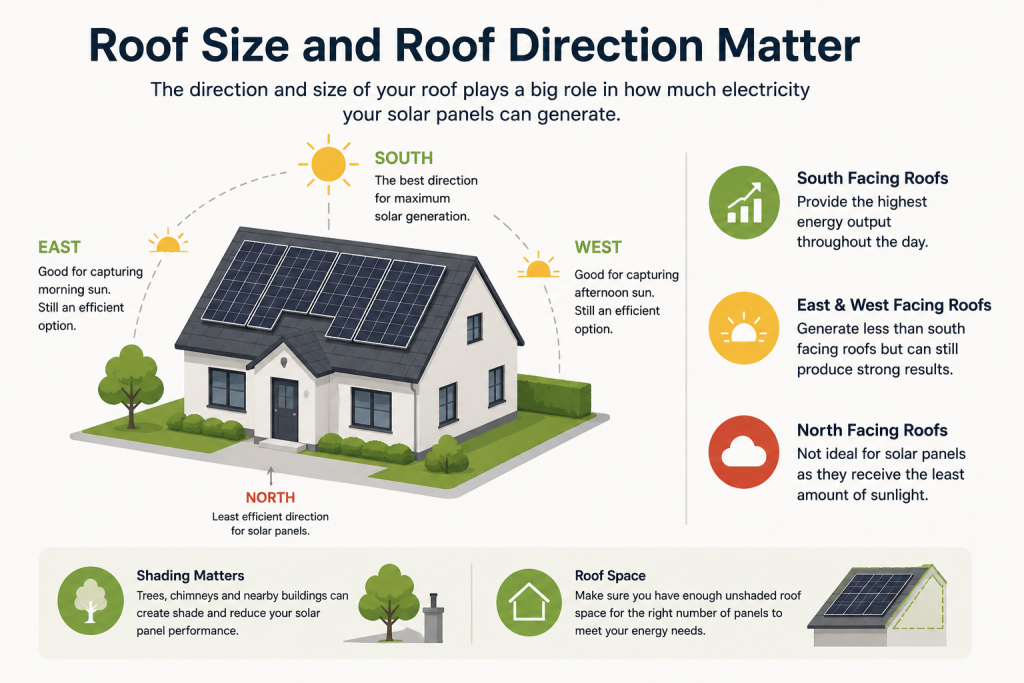
Roof space plays a major role when designing a solar system.
South facing roofs generally offer the highest generation potential in the UK. However, east and west facing roofs can still perform very well depending on the layout.
In contrast, heavy shading from trees or nearby buildings may reduce performance.
For this reason, installers assess roof orientation, shading and available space before recommending a system size.
Most 3 bedroom homes have enough roof space for a standard residential solar installation.
Should You Add Battery Storage?
Battery storage has become increasingly popular alongside solar panels.
Instead of exporting all unused electricity back to the grid, a battery stores excess energy for later use. This allows homeowners to use more of the electricity they generate themselves.
For example, energy generated during the day can power your home in the evening when solar panels are no longer producing electricity.
As a result, battery storage can improve overall system efficiency and reduce reliance on the grid.
Many homeowners also choose battery storage to prepare for future energy usage, especially if they plan to install an EV charger later.
Can Solar Panels Power a Full 3 Bedroom House?
Solar panels can offset a significant portion of a home’s electricity usage. However, it is important to be realistic.
Solar generation changes throughout the year and depends on daylight levels, weather conditions and usage patterns.
During summer, some systems may generate more electricity than the property uses during the day. In winter, generation levels are naturally lower due to shorter daylight hours.
For this reason, most homes still remain connected to the national grid.
However, combining solar panels with battery storage can help homeowners make much better use of the electricity they generate.
What Happens to Excess Solar Energy?
If your solar panels generate more electricity than your home uses, the excess energy will either:
- Charge your battery storage system
- Export back to the national grid
In many cases, homeowners receive payments through the Smart Export Guarantee (SEG) for electricity exported to the grid.
However, export rates vary depending on your provider and tariff.
This is why many homeowners now focus on maximising self usage through battery storage rather than exporting large amounts of electricity.
Is It Worth Installing More Panels?
Some homeowners choose to install additional panels while scaffolding and installation equipment are already in place.
This can be beneficial if:
- You plan to add an EV charger
- You are considering an air source heat pump
- Your household energy usage may increase in the future
In addition, larger systems may improve long term value depending on your usage habits and available roof space.
However, installing the right size system is more important than simply fitting the maximum number of panels possible.
Choosing the Right Solar Installer
Choosing the correct installer is just as important as choosing the panels themselves.
A professional installer will assess:
- Your energy usage
- Roof suitability
- Future energy plans
- Battery storage options
- System performance expectations
At West Coast Electrical & Renewables, we design solar systems around your property and energy usage rather than using standard package sizes.
This ensures your system is practical, efficient and suited to your long term needs.

Thinking About Solar Panels for Your Home?
If you are asking how many solar panels do I need for a 3 bedroom house UK, the answer will depend on your property and energy usage. However, most homes typically require between 8 and 14 panels.
At West Coast Electrical & Renewables, we help homeowners choose systems that match both current and future energy demands. Whether you are considering solar panels on their own or alongside battery storage, we can help design the right solution for your home.