If you’ve ever had the power suddenly switch off after plugging in an appliance, there’s a good chance RCD protection has done exactly what it was designed to do. Although it can be frustrating when your electricity trips unexpectedly, an RCD is one of the most important safety devices in your home’s electrical system.
Modern consumer units include RCD protection to help reduce the risk of electric shock and certain electrical faults. Whether you’re buying a property, upgrading your fuse box or arranging an Electrical Installation Condition Report (EICR), understanding how an RCD works can help you keep your home and family safe.
At West Coast Electrical & Renewables, we install and test electrical systems across Blackpool, Poulton le Fylde, Thornton Cleveleys, Lytham St Annes and the surrounding areas, ensuring they comply with the latest electrical regulations.
What is RCD protection?
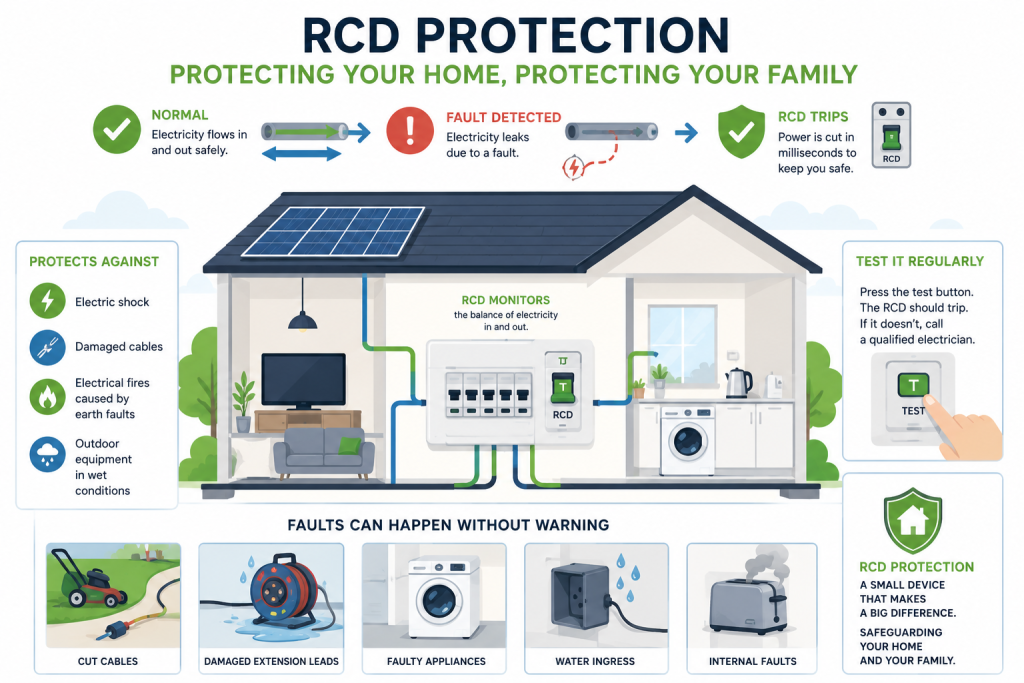
An RCD, which stands for Residual Current Device, is a safety device that constantly monitors the flow of electricity through a circuit.
Under normal conditions, the same amount of electricity flows into a circuit as flows back out again. However, if an electrical fault occurs and some of that electricity escapes, perhaps through damaged wiring or even through a person receiving an electric shock, the RCD detects the imbalance.
When this happens, the RCD disconnects the power extremely quickly. In many cases, this happens in a fraction of a second, helping to reduce the risk of serious injury.
What does an RCD protect against?
RCD protection is designed to improve electrical safety, but it is important to understand what it can and cannot do.
An RCD can help protect against:
- Electric shock.
- Damaged electrical cables.
- Faulty appliances.
- Some electrical fires caused by earth faults.
- Outdoor electrical equipment used in wet conditions.
Although an RCD provides an additional layer of protection, it does not replace safe electrical installations or regular maintenance.
Why is RCD protection so important?
Electricity is something most of us use every day without giving it much thought. However, electrical faults can occur without warning.
For example, a lawnmower cable could accidentally be cut, an outdoor extension lead could become damaged or an appliance could develop an internal fault. Without RCD protection, these situations could become far more dangerous.
Modern electrical regulations require RCD protection on many circuits because it significantly improves safety within the home.
Does every property have RCD protection?
Not always.
Many older properties still have consumer units that were installed before current regulations came into effect. These older fuse boards may not include RCD protection at all, or they may only protect certain circuits.
If your consumer unit contains traditional rewireable fuses or has no test buttons, it may be worth having it inspected by a qualified electrician.
An EICR can identify whether your electrical installation meets current safety standards and whether improvements are recommended.
How do you know if your RCD is working?
Most RCDs include a small test button, usually marked with a “T” or the word “Test”.
Pressing this button creates a small simulated fault. If the RCD is operating correctly, it should switch off immediately.
It is generally recommended that homeowners test their RCDs periodically in accordance with the manufacturer’s guidance. If the device does not trip when tested, or will not reset afterwards, you should contact a qualified electrician.
Why does my RCD keep tripping?
If your RCD trips occasionally, it is usually a sign that it has detected a fault somewhere on the circuit.
Common causes include:
- A faulty electrical appliance.
- Water entering an outdoor socket or fitting.
- Damaged wiring.
- Faulty extension leads.
- Moisture affecting outdoor equipment.
- A fault developing within the electrical installation.
Although it may be tempting to keep resetting the RCD, repeated tripping should never be ignored. The device is responding to a fault, and the underlying cause should be investigated by an electrician.
Is an RCBO the same as an RCD?
Not quite.
An RCBO combines RCD protection with overcurrent protection for an individual circuit.
Many modern consumer units now use RCBOs because they offer greater convenience. If one circuit develops a fault, only that individual circuit switches off rather than several circuits losing power at once.
This can make fault finding easier while reducing disruption throughout the property.
When should you consider upgrading your consumer unit?
If your home has an older fuse board without modern RCD protection, it may be worth discussing a consumer unit upgrade with a qualified electrician.
A replacement consumer unit can provide:
- Modern RCD or RCBO protection.
- Improved electrical safety.
- Easier fault identification.
- Greater protection for today’s electrical demands.
- Compliance with current wiring regulations where applicable.
Every installation is different, so an electrician will always assess your existing system before recommending any upgrade.
Keeping your home electrically safe
RCD protection is one of the most important safety features in any modern electrical installation. Although most homeowners rarely think about it, an RCD works continuously in the background, helping to protect people from electric shock and reducing the risks associated with certain electrical faults.
Whether you’re buying a property, arranging an EICR or considering a consumer unit upgrade, ensuring your electrical installation includes appropriate RCD protection is an important step towards improving safety.
At West Coast Electrical & Renewables, we carry out electrical testing, consumer unit upgrades and domestic electrical work across Blackpool, Poulton le Fylde, Thornton Cleveleys, Lytham St Annes and the surrounding areas. If you would like advice on the safety of your electrical installation, our experienced team will be happy to help.