When people start looking into solar panels, one of the first questions they often ask is, “How many solar panels do I need?” It sounds like the obvious place to start. However, the number of panels on your roof only tells part of the story.
At West Coast Electrical & Renewables, we look closely at your electricity usage before designing a solar PV system. How much electricity you use, when you use it and how your energy needs could change in the future can all influence the system that suits your home.
Two similar houses could have completely different energy requirements. Therefore, simply choosing a solar system based on the size of your property may not give you the full picture.
Why Electricity Usage Is Important When Choosing Solar Panels
Your annual electricity consumption gives us a useful starting point when designing a solar PV system.
Electricity usage is usually measured in kilowatt hours, or kWh. You can normally find your annual consumption on your electricity bill or through your energy supplier.
However, the annual figure is only one part of the assessment. We also need to consider when you use electricity.
For example, one household may use a large proportion of its electricity during the daytime. Another may be empty throughout the working day and use most of its electricity during the evening.
Although both homes could use a similar amount of electricity over the year, their ideal solar and battery systems could look quite different.
Your Lifestyle Can Change Your Electricity Usage
Modern homes can have very different electrical demands.
As a result, we look beyond the number of bedrooms or the physical size of the property. Instead, understanding how the household actually uses electricity helps us build a more detailed energy profile.
Some of the things that can influence electricity consumption include:
- Electric vehicle charging
- Air source heat pumps
- Electric showers
- Induction hobs and electric ovens
- Hot tubs
- Home offices
- Electric heating
- Large families
- Working from home
- Future plans to move away from gas
For example, a three bedroom home with an EV and an air source heat pump could have significantly different electricity requirements from another three bedroom property.
Therefore, saying that every three bedroom house needs a certain number of solar panels would be far too simplistic.
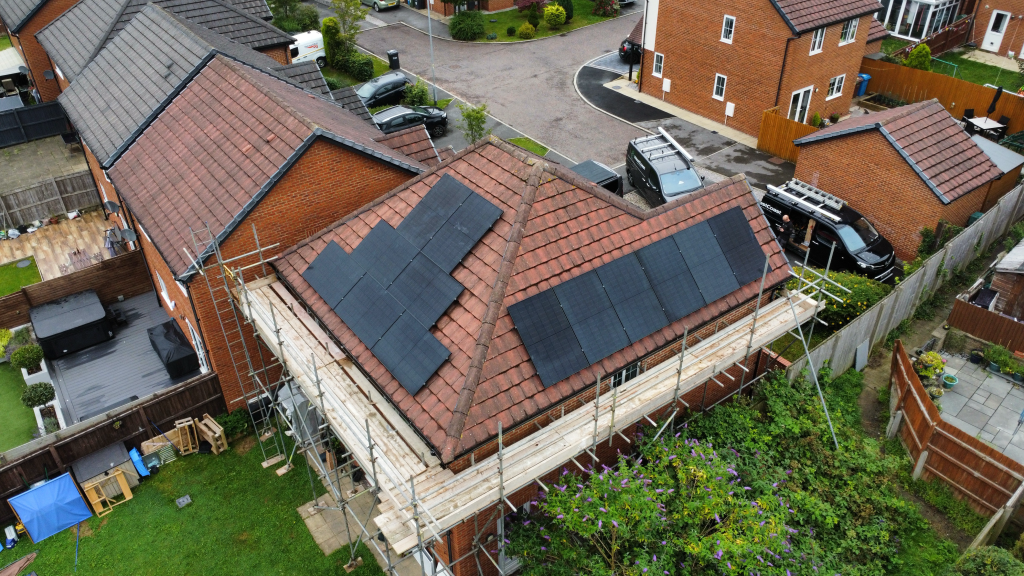
How Many Solar Panels Do You Actually Need?
There isn’t one number that works for every property.
Solar panels also come in different power ratings. Therefore, comparing systems purely by panel quantity can sometimes be misleading.
For example, a system using higher output panels may achieve a similar overall installed capacity with fewer panels than a system using lower output panels.
Roof space also matters. Orientation, pitch, shading and the available roof area all need to be considered as part of the design.
A professional solar assessment should bring these factors together rather than focusing on panel numbers alone.
When You Use Electricity Matters Too
Solar panels generate electricity during daylight hours. However, household electricity demand does not always match solar generation.
Perhaps you work from home and use electricity throughout the day. Alternatively, your property may be relatively quiet until everyone returns home in the evening.
Understanding this pattern can help when deciding whether battery storage would complement the solar PV system.
A battery can store electricity for use later rather than requiring all solar generation to be used at the moment it is produced. However, battery size should also reflect the household’s requirements.
Installing a larger battery does not automatically make a system better. Instead, battery capacity should form part of the overall system design.
Battery Storage Can Change How You Use Electricity
Battery storage has become an important part of many of the renewable energy systems we install across Blackpool, Poulton le Fylde, Thornton Cleveleys, Lytham St Annes and the wider Lancashire area.
Solar generation is only one potential source of energy for a home battery.
Depending on the battery, energy supplier and tariff, some systems can also charge from the grid during lower priced periods. Stored electricity can then be available for use later.
This makes understanding your tariff and usage pattern increasingly important.
For example, a household with an EV may already have access to a smart or time of use tariff. In this situation, solar PV, battery storage and EV charging should be considered together rather than as completely separate technologies.
Electricity tariffs, rates and eligibility vary between suppliers. Therefore, potential savings will depend on individual circumstances, electricity consumption, system design and the tariff available.

What If Your Electricity Usage Is Going to Increase?
Looking at previous electricity bills is useful, but we also need to consider what might happen next.
You may currently have relatively low electricity consumption. However, perhaps you plan to buy an electric vehicle next year. You could also be considering an air source heat pump, extension or other major electrical upgrade.
These changes could increase future electricity demand.
Therefore, it is worth discussing future plans when your solar PV and battery system is being designed.
This doesn’t necessarily mean installing the largest possible system immediately. Instead, it allows the design to take potential future requirements into account where practical.
Solar Panels and Air Source Heat Pumps
Air source heat pumps are another reason why household electricity usage is becoming increasingly important.
Unlike a gas boiler, an air source heat pump uses electricity to operate. Consequently, installing one can change the electrical profile of a property.
Solar PV can contribute towards the electricity requirements of a home with an air source heat pump. However, generation and demand will vary throughout the year.
For example, heating demand is generally greater during colder months when solar generation is typically lower than during spring and summer.
Therefore, solar PV and an air source heat pump should not be viewed as a guarantee that solar will cover all heating electricity requirements. A properly designed system needs to consider seasonal generation and realistic household demand.
Why We Ask for Your Electricity Bill
If you’re looking for a solar quotation, don’t be surprised if we ask about your electricity usage.
We’re not just interested in what you currently pay each month. Instead, the annual kWh figure helps us understand how much electricity the property actually uses.
We may also ask about your tariff, EV charging, battery storage and other higher consumption appliances.
This information gives us a better understanding of the property before recommending a system.
After all, solar PV should be designed around the home and the people living in it, rather than simply filling every available section of roof with panels.

Solar System Design in Blackpool and Lancashire
West Coast Electrical & Renewables designs and installs solar PV, battery storage, EV chargers and air source heat pumps across Blackpool and the surrounding Lancashire area.
We are MCS certified and RECC accredited, and our electrical background also allows us to consider the wider electrical requirements of the property when planning renewable energy installations.
If you’re considering solar panels, knowing your annual electricity consumption is a useful place to start. From there, we can look at the property, your current energy habits and your future plans to design a system around your individual requirements.