Your electricity needs today may look very different from when your solar panels were first installed. Perhaps you now have an electric vehicle, work from home or plan to install an air source heat pump. You may also have unused roof space that could support additional panels.
So, can you add more solar panels to an existing system? In many cases, yes. However, we need to consider the existing inverter, panels, roof space and grid connection before expanding a solar PV system.
Why Add More Solar Panels?
There are several reasons why homeowners decide to expand an existing solar installation.
Your electricity consumption may have increased since the original system was designed. For example, an EV, electric heating or changes to your daily routine can increase demand.
Alternatively, your original installation may only use one section of the roof. Therefore, there could be space available for additional solar panels.
Solar technology has also developed considerably. Modern panels can often provide more power from a similar amount of roof space than older models.
However, more panels are not automatically better. The additional generation needs to make sense for your property and energy usage.
Can You Simply Add More Panels?
Sometimes. However, we first need to understand the solar system already installed.
We will usually look at:
- Existing solar panel specifications
- Inverter make and model
- Current system capacity
- Available roof space
- Electrical supply
- Existing grid connection
- Battery storage, if installed
Once we have this information, we can decide how the system could be expanded.
In some cases, additional panels can work with the existing equipment. However, another inverter or a separate solar array may be a better option for other properties.
Does My Existing Inverter Matter?
Yes. Your inverter is an important part of the assessment.
Solar panels generate DC electricity, while your home uses AC electricity. Therefore, the inverter converts the electricity into a usable form.
However, every inverter has operating limits. As a result, you cannot simply continue adding panels without checking its specification.
Your existing inverter may have enough capacity for additional panels. Alternatively, we may need to look at another inverter or a different system design.
We assess this before recommending any additional solar panels.
Do New Solar Panels Need to Match the Existing Panels?
Not always.
If your system is several years old, the exact solar panels may no longer be available. Modern panels may also have different power ratings and electrical characteristics.
Therefore, we need to consider compatibility.
Mixing different panels within the same solar array is not always the best solution. Instead, it may make more sense to create a separate array or use different inverter technology.
For example, microinverter technology such as Enphase can provide additional design flexibility in suitable installations because panels operate more independently.
However, the right approach depends on the existing system.

What About G98 and G99?
Grid connection requirements are another important consideration when you add more solar panels.
Solar PV systems connect to the local electricity distribution network. Therefore, the Distribution Network Operator, known as the DNO, needs to know about connected generation.
Depending on the capacity and design, an installation may follow a G98 or G99 connection process.
Adding panels increases the generation capacity of the property. Consequently, an existing connection may need to be reassessed.
For systems that require G99 approval, we deal with the relevant application as part of the process. The DNO can then assess the proposed generation and local network capacity.
In some cases, the DNO may also specify an export limit.
Suitable export limitation equipment can sometimes allow a larger system to operate while controlling how much electricity enters the grid. However, this depends on the individual installation and DNO requirements.
Can I Add Battery Storage at the Same Time?
Yes. Expanding your solar system can also be a good opportunity to consider battery storage.
A battery can store some excess solar generation for use later. Therefore, it may increase the amount of generated electricity you can use within your property.
However, battery storage is not essential when adding solar panels.
We look at your electricity usage, solar generation and available tariffs before recommending battery capacity. We can also consider whether charging a battery during cheaper electricity periods would suit your household.
West Coast Electrical & Renewables installs battery technology from established manufacturers, including AlphaESS, Enphase and Tesla.
Can Panels Be Added to Another Roof?
Potentially, yes.
Additional solar panels do not always need to sit next to the existing array. Depending on the property, we may be able to use another roof elevation, garage, extension or suitable outbuilding.
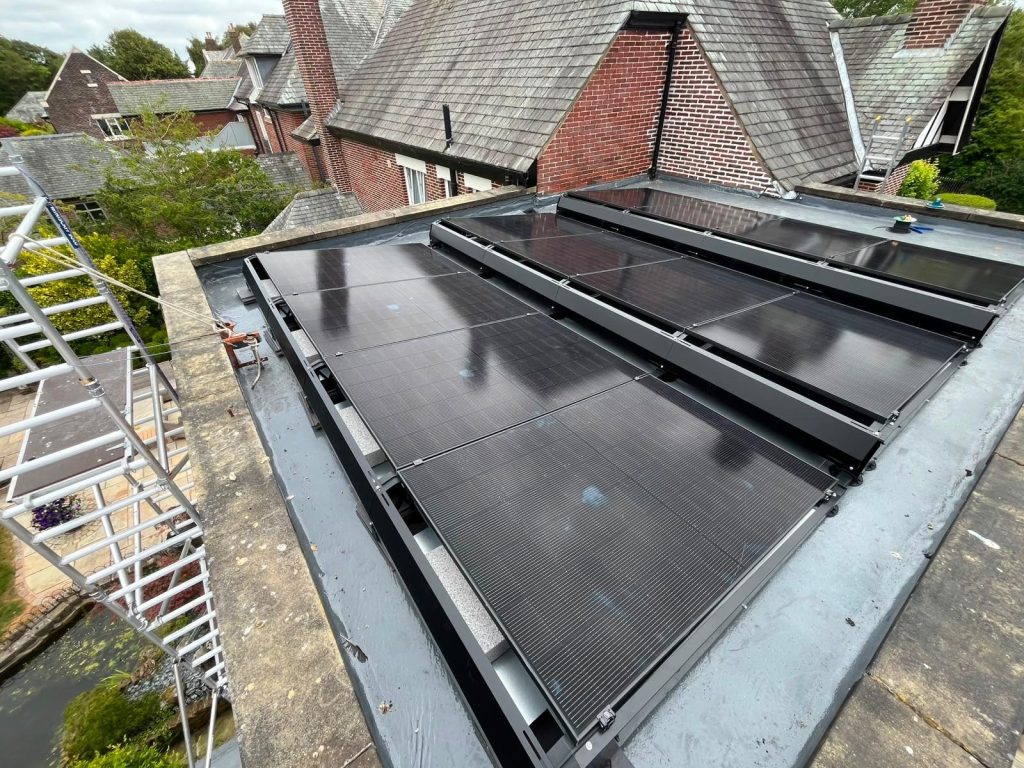
Flat roofs can also provide valuable space for additional solar generation.
However, we still need to assess orientation and shading. Trees, chimneys and nearby buildings can all affect performance.
Therefore, we look at the whole property before deciding where additional panels should go.
What If My Original Solar Installer Is No Longer Trading?
You can still explore your options.
This situation is fairly common, particularly with older solar installations. You may also have moved into a property where the previous owner installed the system.
If possible, locate your original MCS certificate, handover documents and information about the inverter and panels.
We can then assess the existing equipment and determine what options are available.
Adding More Solar Panels for an EV or Heat Pump
Future energy use should also form part of the design.
For example, installing an EV charger or an air-source heat pump can increase household electricity consumption. Therefore, additional solar generation may be worth considering.
However, we look at the complete energy profile rather than assuming more solar is always the answer.
For EV owners, overnight smart tariffs can sometimes provide lower cost charging. Meanwhile, solar generation can contribute towards overall daytime electricity use.
By considering solar, battery storage and electricity tariffs together, we can design a system around how you actually use energy.
Adding More Solar Panels in Blackpool
West Coast Electrical & Renewables installs and expands solar PV systems across Blackpool, Poulton-le-Fylde, Thornton Cleveleys, Lytham St Annes and surrounding areas of Lancashire.
As an MCS certified installer, we assess the existing equipment, roof space and electrical setup before recommending an expansion.
We can also look at inverter requirements, battery storage and the relevant DNO connection process.
Most importantly, we design around your property and electricity usage rather than simply fitting the maximum number of panels available.

Can I Add More Solar Panels to My Existing System?
For many homes and businesses, the answer is yes.
However, your existing panels, inverter, roof space, electrical supply and grid connection all need to work with the proposed expansion.
Therefore, the best place to start is with an assessment of your current solar installation.
If you would like to add more solar panels to your existing system, West Coast Electrical & Renewables can review what you already have and discuss the options available.