If you are considering solar PV, you might be wondering whether your existing fuse box is suitable. A consumer unit upgrade for solar panels is not automatically required. However, your electrical installation does need to be assessed before solar PV is connected. The condition, age and configuration of your existing consumer unit can all affect what work is needed.
At West Coast Electrical & Renewables, we are both electrical contractors and renewable energy installers. Therefore, we can look at the complete electrical installation rather than considering the solar panels in isolation.
Some properties are already suitable for solar PV. Others may need alterations or upgrades before installation. Either way, the first step is understanding what is already there.
What Does a Consumer Unit Do?
Your consumer unit is a central part of your home’s electrical installation. You may also hear it called a fuse box, although modern installations use circuit breakers and additional protective devices rather than traditional rewireable fuses.
The consumer unit distributes electricity around your property through individual circuits. For example, you may have separate circuits for sockets, lighting, an electric oven and other electrical equipment.
It also contains protective devices designed to operate when certain electrical faults occur.
When we add solar PV, we are introducing electricity generation equipment to the property. As a result, we need to consider how that equipment will connect safely to the existing electrical installation.
Do I Need a Consumer Unit Upgrade for Solar Panels?
Not necessarily.
If your existing consumer unit and electrical installation are suitable, there may be no reason to replace them simply because you are having solar panels installed.
However, older installations can require additional work.
Before installing solar PV, we need to establish whether the existing electrical installation can safely accommodate the new equipment. We also need to consider the protective devices already installed and how the solar PV system will integrate with them.
Therefore, we assess each property individually.
A consumer unit that looks old does not automatically mean it must be replaced. Equally, a relatively modern looking consumer unit does not guarantee that everything behind it is suitable.
Testing and inspection are important parts of making that decision.
What Do We Check Before Installing Solar Panels?
Before we recommend a solar PV installation, we look at much more than your roof.
The electrical side of the property is an important part of the survey and design process.
Depending on the installation, our assessment may include the condition and configuration of the consumer unit, available capacity, existing protective devices, earthing and bonding arrangements and the proposed connection for the solar PV system.
We also consider the wider electrical installation.
This matters because solar panels, an inverter, battery storage, EV charging and other electrical equipment all form part of a home’s overall energy system.
As electricians as well as renewable energy installers, we can identify any electrical work that should be considered before the renewable installation goes ahead.

What If My Consumer Unit Is Old?
Having an older consumer unit does not automatically prevent you from installing solar panels.
However, it may need closer assessment.
Electrical standards and protective technology have developed significantly over time. Consequently, an older installation may not provide the same type of protection that you would expect from a modern consumer unit.
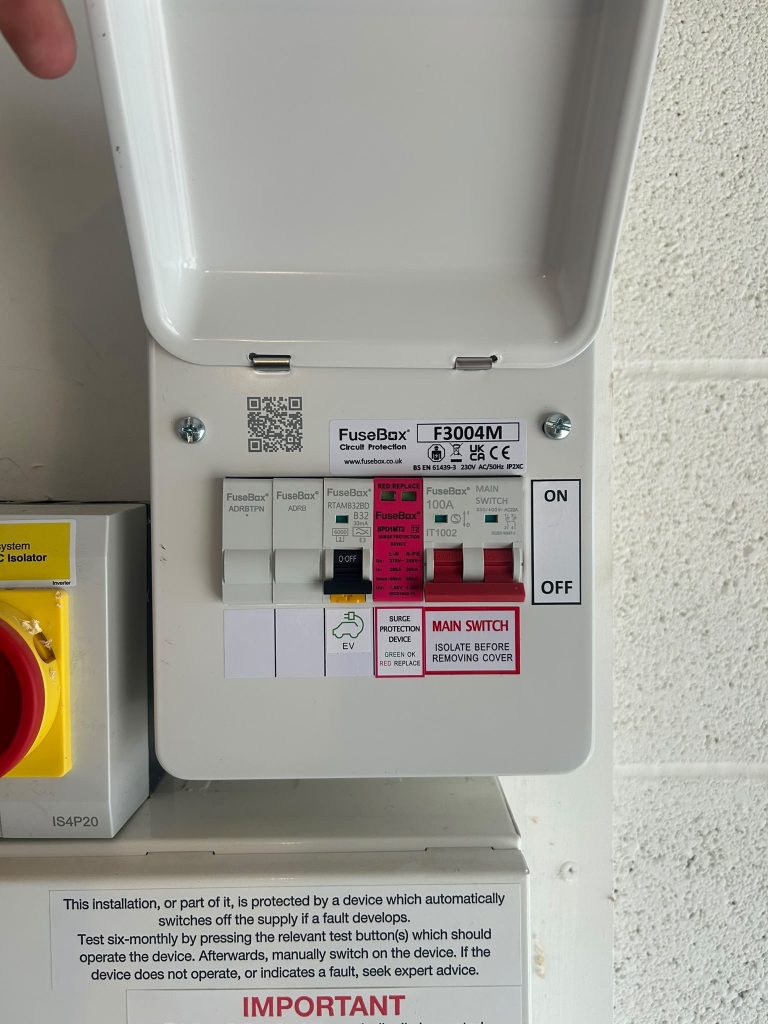
For example, modern consumer units can incorporate devices such as RCBOs, which combine residual current and overcurrent protection for individual circuits. Surge protection may also form part of a modern installation where required by the design and current wiring regulations.
If we identify that your existing setup needs work, we will explain what we have found and what needs to happen before or alongside the solar installation.
We do not recommend replacing a consumer unit simply because you are buying solar panels. Instead, any recommendation should be based on the condition and suitability of the electrical installation.
What If There Is No Space in My Consumer Unit?
Available space is another consideration.
Solar PV needs to be connected correctly to the electrical installation with appropriate protection. Therefore, the design needs to account for the equipment already installed and the available capacity within the existing setup.
If the consumer unit does not have suitable capacity or space for the proposed arrangement, we can look at the available options.
That does not necessarily mean the whole consumer unit must always be replaced. The correct solution depends on the existing installation and the proposed solar system.
This is another reason why a proper assessment should take place before work starts.
What About RCD and RCBO Protection?
Modern electrical installations use protective devices to reduce electrical risk.
An RCD, or residual current device, monitors the electrical current flowing through a circuit and can disconnect the supply when it detects certain types of fault.
An RCBO combines residual current protection with protection against overloads and short circuits for an individual circuit.
The exact protective arrangement required for a solar PV installation depends on the equipment, manufacturer’s instructions and electrical design.
Therefore, we do not take a one size fits all approach.
We assess the existing installation and design the new electrical work around the equipment being fitted and the applicable requirements.
What About Surge Protection?
Surge protective devices, commonly known as SPDs, are designed to help protect electrical installations and connected equipment from transient overvoltages.
Modern homes contain increasing amounts of electronic equipment. In addition, renewable technologies introduce equipment such as solar inverters, batteries and EV chargers.
Whether surge protection is required forms part of the electrical design and assessment.
Again, this does not mean that every person enquiring about solar automatically needs a completely new consumer unit. Instead, we look at the existing protection and determine what is appropriate for the installation.
Can You Upgrade the Consumer Unit at the Same Time as Solar?
Yes.
One advantage of choosing a company that carries out both electrical and renewable energy work is that we can consider both parts of the project together.
If your consumer unit does require upgrading, we can incorporate this into the planned work.
This can also be a useful opportunity to think about future electrical requirements.
For example, you may currently be installing solar panels but plan to add battery storage later. Alternatively, you might be considering an EV charger or an air source heat pump in the future.
Knowing about those plans allows us to consider them when assessing the electrical installation.
That does not mean installing unnecessary equipment now. However, thinking ahead can help us make better design decisions.
Does Battery Storage Affect the Consumer Unit?
Battery storage adds another element to the electrical system.
If you are having solar PV and battery storage installed together, we consider both technologies as part of the design.
Similarly, if you already have solar panels and want to add a battery later, we will assess the existing solar and electrical equipment before designing the battery installation.
The battery system, inverter arrangement, electrical protection and proposed operating mode all need consideration.
Some battery systems can also provide backup functionality when correctly designed and installed. However, backup power requires specific equipment and electrical arrangements. Simply having a battery does not automatically mean your whole home will remain powered during a power cut.
What If I Want an EV Charger in the Future?
Tell your installer.
Even if you are not ready for an EV charger now, knowing that you may want one in the future can be useful when we assess your electrical installation.
An EV charger introduces another significant electrical load. Therefore, electrical demand, available supply and load management may need consideration.
The same applies to other technologies, including air source heat pumps.
Homes are becoming increasingly electrified. As a result, we believe it makes sense to look at the bigger picture when carrying out major electrical or renewable work.

Why Electrical Experience Matters With Solar PV
Solar PV is not simply a case of attaching panels to a roof.
Behind the panels is an electrical generation system that needs to integrate correctly with your property.
The inverter, isolators, protective devices, cabling, consumer unit and electricity supply all form part of the installation.
At West Coast Electrical & Renewables, our work covers both traditional electrical services and renewable energy technologies. We install solar PV, battery storage, EV chargers and air source heat pumps alongside our wider domestic and commercial electrical work.
Therefore, if we identify an electrical issue while assessing a property for solar, we have the experience to look at the complete installation.
Solar Panel and Consumer Unit Assessments in Lancashire
If you are considering solar panels in Blackpool, Poulton le Fylde, Thornton Cleveleys, Lytham St Annes, Preston or surrounding areas, the existing electrical installation should form part of the planning process.
Some homes will already have a suitable modern setup.
Others may need relatively minor alterations. Meanwhile, an older electrical installation may benefit from more substantial work before renewable technologies are added.
The important point is that you should not assume you need a new consumer unit simply because you want solar panels.
A proper assessment allows us to determine what your property actually needs.

Thinking About Solar Panels for Your Home?
If you are considering solar PV but are unsure whether your existing fuse box or consumer unit is suitable, West Coast Electrical & Renewables can assess your property and explain the available options.
We can look at your existing electrical installation, proposed solar PV system and any future plans for battery storage, EV charging or an air source heat pump.
If electrical upgrades are required, we can explain why they are needed and incorporate them into the overall project. If your existing installation is suitable, we will not recommend a consumer unit replacement simply for the sake of it.