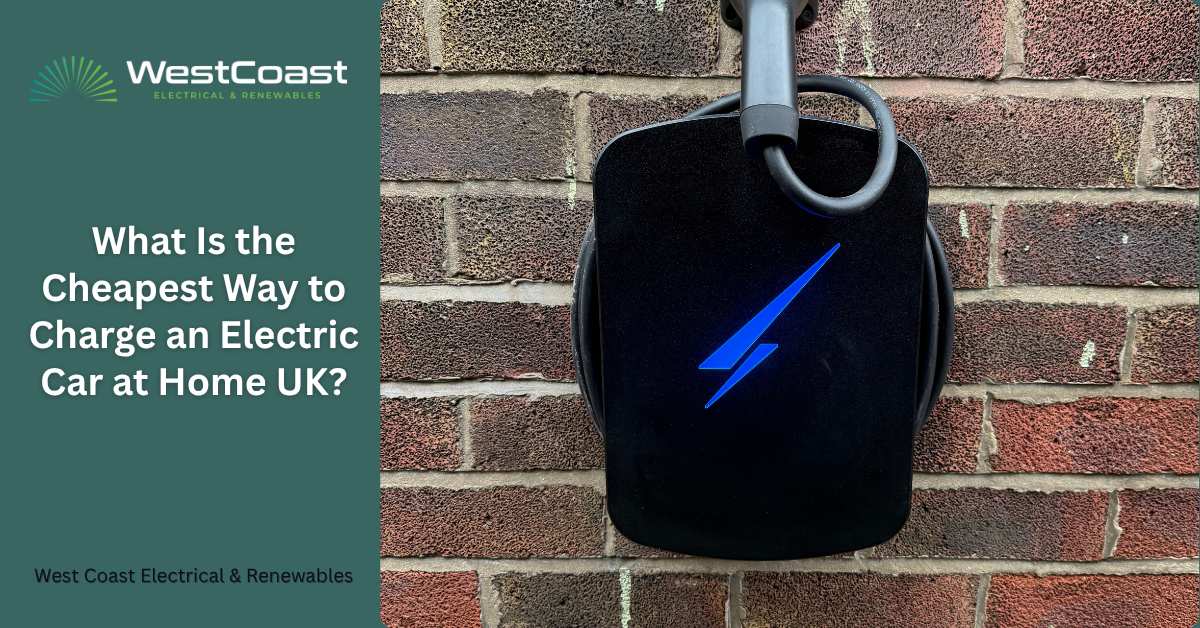
As more drivers move towards electric vehicles, many homeowners are now asking what is the cheapest way to charge an electric car at home UK. While electric vehicles are often cheaper to run than petrol or diesel cars, charging costs can still vary depending on how and when you charge.
Fortunately, there are several ways to reduce charging costs at home. From smart tariffs to overnight charging, choosing the right setup can make a noticeable difference over time.
At West Coast Electrical & Renewables, we install home EV chargers across Blackpool and the surrounding areas, helping homeowners choose charging solutions that work alongside their property and energy usage.
Why Charging Costs Can Vary
Firstly, EV charging costs depend on the price you pay per kilowatt hour (kWh) of electricity.
Energy prices vary between suppliers and tariffs. In addition, some tariffs offer much cheaper rates during off peak hours, usually overnight.
As a result, charging the same electric vehicle at different times of the day can lead to very different costs.
For example, charging during peak daytime hours may cost significantly more than charging overnight on an EV tariff.
Overnight Charging Is Usually the Cheapest Option
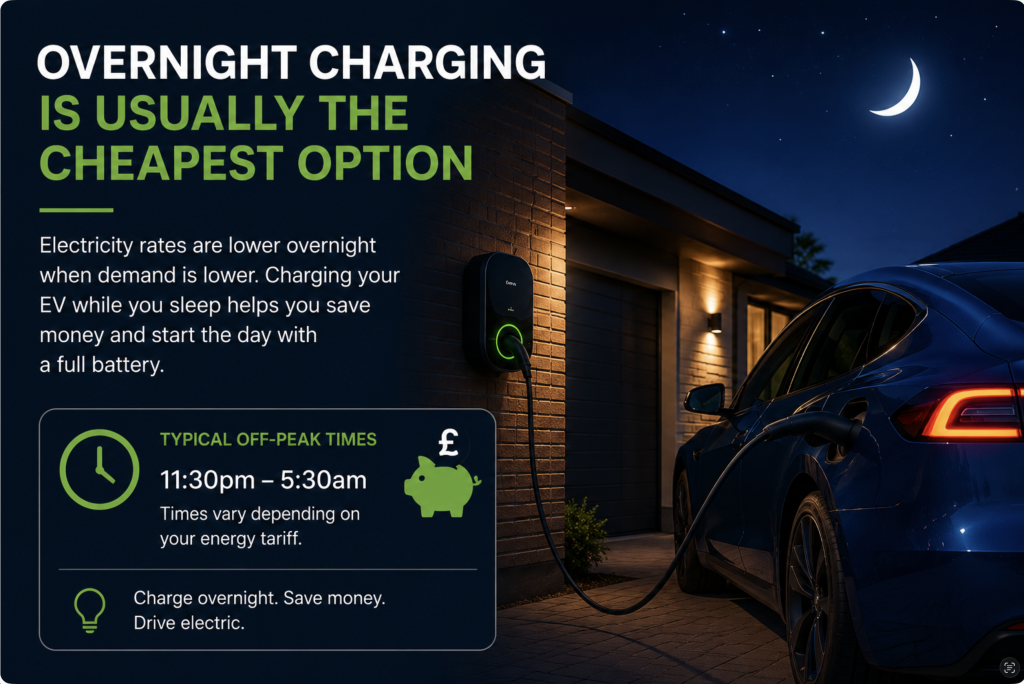
In most cases, overnight charging offers the lowest cost.
Many energy suppliers now offer EV specific tariffs with reduced overnight rates. These tariffs are designed to encourage charging when electricity demand is lower.
For this reason, many EV owners schedule charging during off peak periods rather than charging immediately after arriving home.
Smart chargers make this much easier because they allow homeowners to schedule charging automatically.
How Much Does It Cost to Charge an Electric Car at Home?
Charging costs depend on:
- Vehicle battery size
- Electricity tariff
- Time of charging
- Charger efficiency
As a rough example, a 60kWh battery charged on a lower overnight tariff may cost significantly less than charging during standard daytime rates.
However, electricity prices and tariffs regularly change. Therefore, it is always worth checking the latest rates with your provider.
In most cases, charging at home still works out cheaper than relying entirely on public rapid chargers.
Do Smart Chargers Help Reduce Costs?
Yes, smart chargers can help homeowners manage charging more efficiently.
Modern EV chargers often include:
- Scheduled charging
- App control
- Usage monitoring
- Tariff integration
These features allow you to charge your vehicle during cheaper periods automatically.
As a result, smart chargers can help reduce running costs without needing to manually control charging every day.
At West Coast Electrical & Renewables, we regularly install smart chargers including:
- Hypervolt
- Ohme
- Easee
- Andersen
- Simpson & Partners
Each charger offers different features depending on your priorities and setup.
Can Solar Panels Reduce EV Charging Costs?
Many homeowners now combine EV chargers with solar panels and battery storage.
While solar panels do not directly charge your vehicle independently, they can reduce how much electricity your home imports from the grid.
For example, daytime solar generation may help support household energy usage while charging takes place.
In addition, battery storage can store excess electricity for use later in the day.
However, it is important to be realistic. In some situations, charging overnight on a cheaper tariff may still provide better value than charging purely from daytime solar generation.
The best setup depends on your usage habits, tariff and energy generation.
Is a Standard Plug Socket Cheaper?
Although it is possible to charge an EV from a standard three pin socket, this is not usually the cheapest or most practical long term option.
Charging this way is much slower and less efficient compared to a dedicated EV charger.
In addition, standard sockets are not designed for continuous high load charging over long periods.
For this reason, most EV owners choose a dedicated home charger.
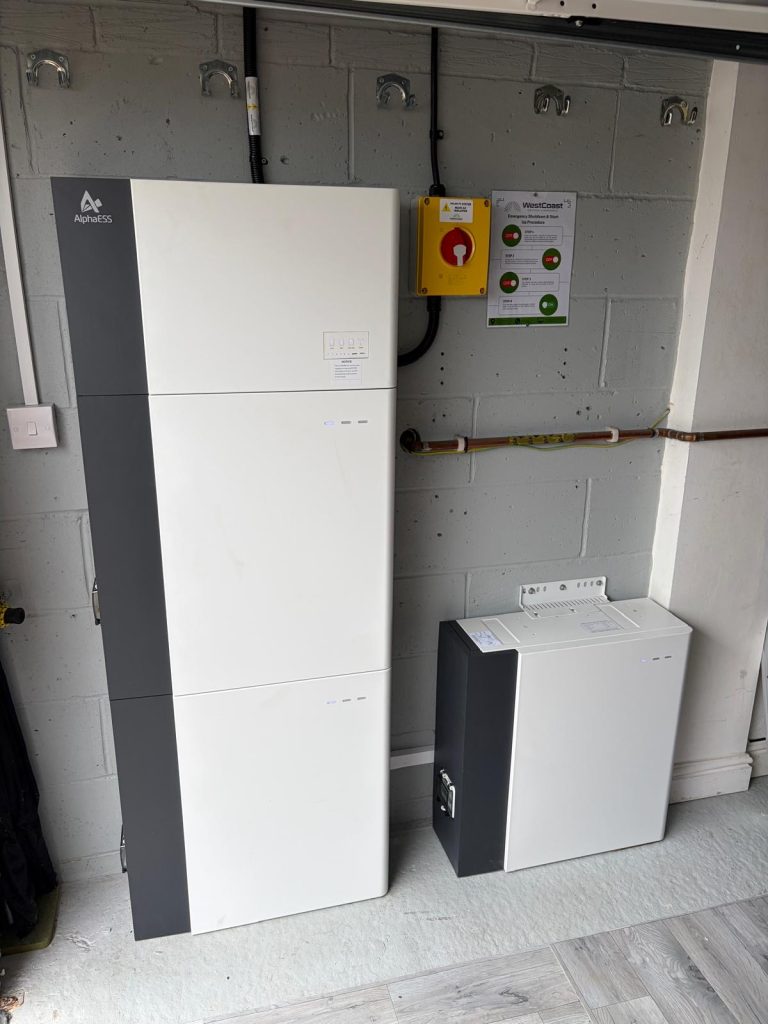
Can Battery Storage Help with EV Charging?
Battery storage may also help reduce charging costs, depending on your setup.
For example, some homeowners charge their battery overnight using cheaper electricity and then use stored energy later.
This can help reduce electricity imported during higher rate periods.
However, the benefits depend on battery size, charging habits and your energy tariff.
What Should You Look for in an EV Tariff?
When comparing EV tariffs, homeowners often look at:
- Overnight electricity rates
- Off peak charging windows
- Standing charges
- Smart charging compatibility
In many cases, the cheapest tariff is not always the one with the lowest overnight rate. Therefore, it is important to consider your full household energy usage.
Thinking About Installing an EV Charger?
If you are asking what is the cheapest way to charge an electric car at home UK, overnight charging with a smart tariff is usually the most cost effective option.
At West Coast Electrical & Renewables, we install EV charging systems designed around your property and energy usage. Whether you are installing your first charger or upgrading your setup, our team can help you choose the right solution.