If you are considering a home EV charger installation, you may be wondering whether your property is actually ready for one. Do you need a new consumer unit? Is your electrical supply large enough? Where will the cable go? These are all common questions we receive from customers before they book an installation.
The good news is that many UK homes can accommodate an EV charger. However, every property is different. Therefore, we carry out the appropriate checks before installation to make sure the proposed charger and electrical work are suitable for your home.
At West Coast Electrical & Renewables, we install EV chargers across Blackpool, Poulton le Fylde, Thornton Cleveleys, Lytham St Annes and surrounding areas. Here are some of the main things we look at before an installation goes ahead.
What Do We Check Before a Home EV Charger Installation?
An EV charger can place a significant additional demand on your electrical supply. Therefore, we cannot simply fit a charger to the wall and connect it without first assessing the existing installation.
Before your installation, we will usually need to consider:
- Your electricity supply and main fuse
- Your consumer unit
- The proposed charger location
- The cable route
- Your existing electrical demand
- The EV you drive or plan to buy
- Any solar PV or battery storage already installed at the property
These checks help us plan the installation correctly and identify whether any additional electrical work may be required.
Does My Consumer Unit Need Upgrading for an EV Charger?
Not necessarily.
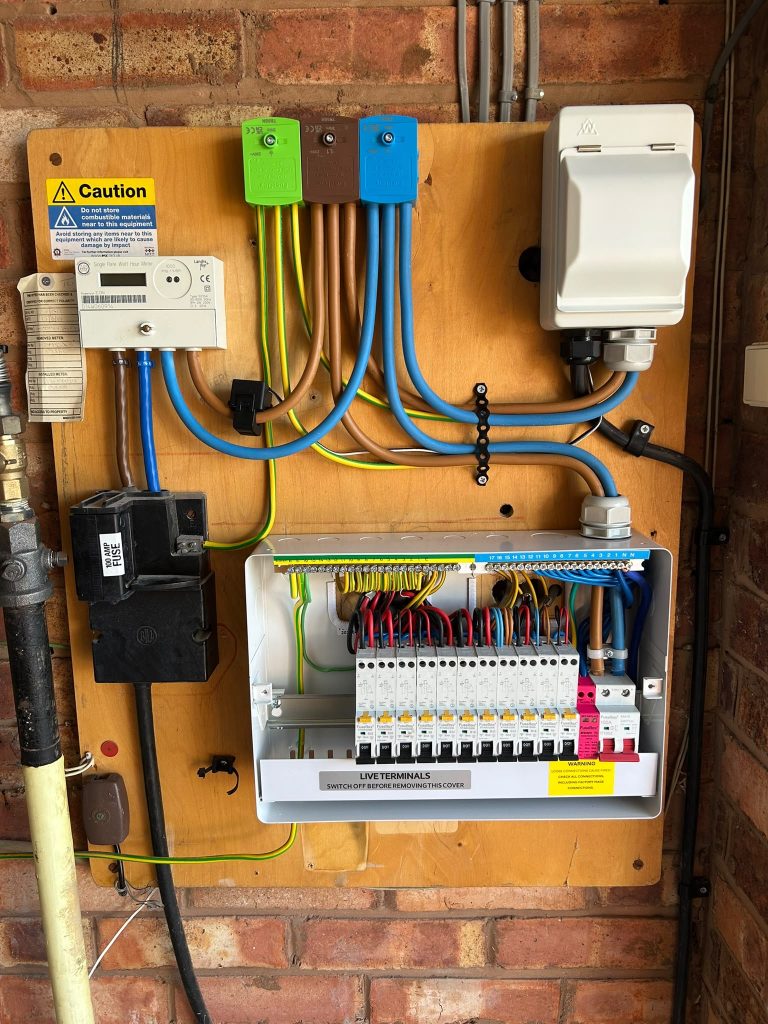
One of the first things customers often ask is whether they will need a new consumer unit before having an EV charger installed.
In some homes, the existing consumer unit has suitable capacity and the installation can be planned around it. However, older installations or consumer units with limited space may require additional work.
Importantly, a lack of spare ways in the existing consumer unit does not automatically mean the entire unit needs replacing. Depending on the installation, there may be other compliant options available.
We assess this as part of the installation process rather than recommending unnecessary work.
Is My Electrical Supply Large Enough?
Your incoming electrical supply is another important consideration.
Most home EV chargers that we install operate at up to 7kW on a single phase supply. However, the charger is not the only electrical load within your home.
For example, you may also have an electric shower, induction hob, electric heating, solar battery system or other high demand appliances.
Because of this, we look at the property as a whole.
Modern EV chargers can also use load management technology. This can monitor the electrical demand within the property and manage the charger accordingly. As a result, the charger does not operate in isolation from everything else happening within your home.
The exact solution will depend on your property, electrical installation and chosen charger.
Where Can an EV Charger Be Installed?
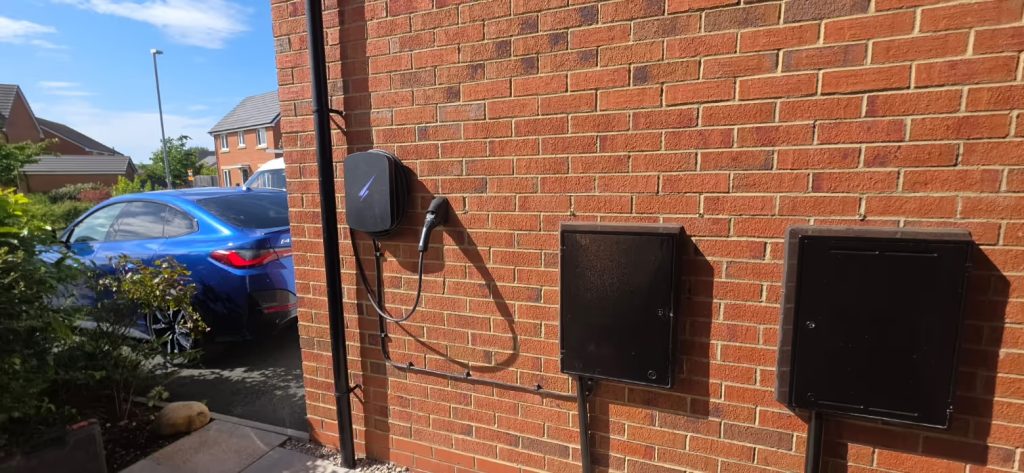
The position of your charger can make a big difference to the installation.
Ideally, it should be somewhere convenient for parking and connecting your vehicle. However, we also need to consider the cable route back to the electrical supply.
A straightforward installation might involve a relatively short cable route from the consumer unit or meter area to an external wall.
Other properties can be more complicated. For example, the cable may need to travel through a garage, under floors, around the side of the property or across a longer distance.
We always consider how the finished installation will look as well as how it will function. A neat cable route can make a significant difference to the overall appearance.
Can You Check My Property From Photos?
In many cases, yes.
You do not always need to arrange a site survey before receiving an EV charger quotation.
We can often carry out an initial assessment using a few clear photographs and a short video.
We normally ask customers to send us a clear photograph showing the electricity meter, main fuse and surrounding equipment. We will also need a photograph of the consumer unit and the proposed charger location.
If possible, a short video showing the route between the electrical supply and proposed charger position is also extremely useful.
From there, we can assess the information and advise on the next steps.
Which EV Charger Should I Choose?
There is no single charger that will suit every home.
At West Coast Electrical & Renewables, we offer different options because customers have different priorities. Some people want advanced app controls, while others place more importance on appearance, cable length, smart tariff compatibility or how the charger will look on the front of their home.
We install chargers from brands including Hypervolt, Simpson & Partners and Easee.
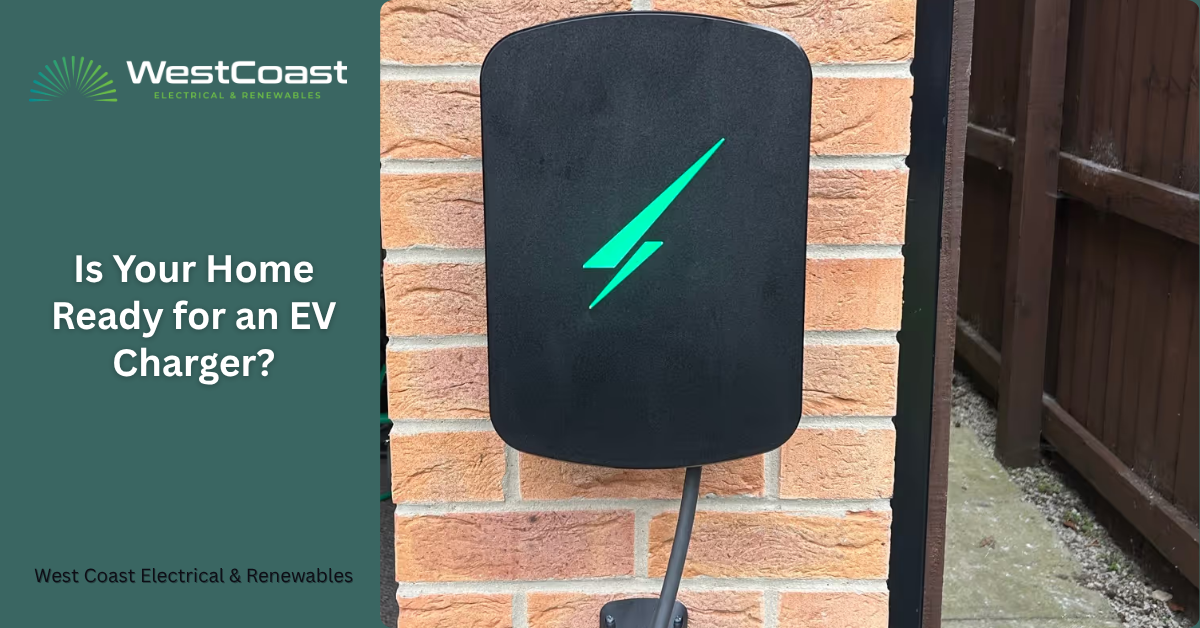
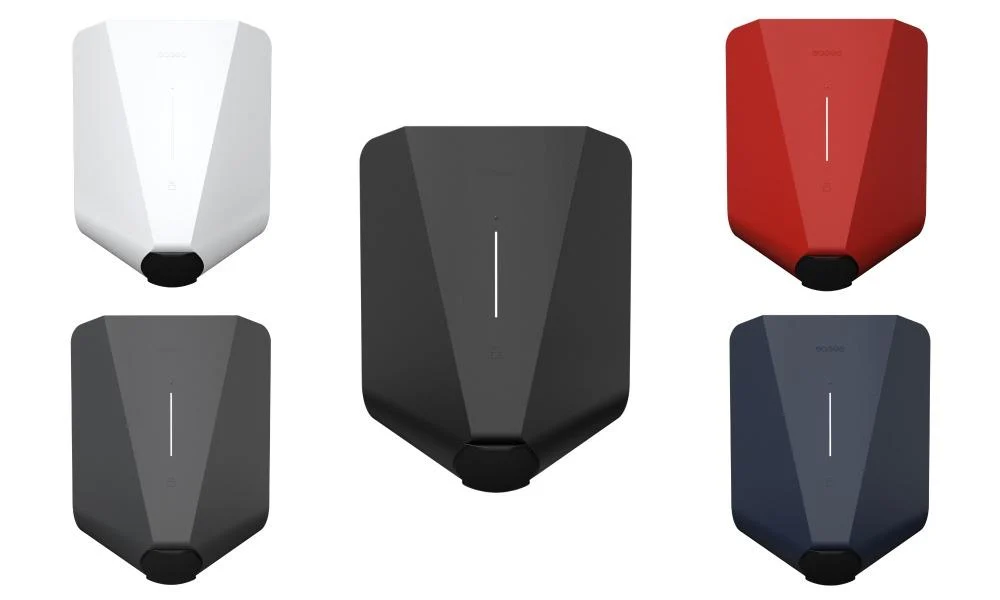
Hypervolt remains one of our most popular choices. The Hypervolt Home 3 Pro offers smart charging features, automated load management, integrated PEN fault protection and a robust IP66 rated enclosure. It is also available in different colours, which can help the charger suit the exterior of the property.
However, we can discuss the different options with you rather than simply recommending the same charger for every installation.

What If I Already Have Solar Panels or Battery Storage?
If your property already has solar PV or battery storage, tell us when enquiring about your EV charger.
These systems can form part of a wider home energy setup. However, how you choose to charge your vehicle will depend on your energy generation, household consumption, tariff and charging routine.
For example, some customers may choose to schedule EV charging around cheaper overnight electricity rates. Others may want to make greater use of electricity generated by their solar PV system when conditions and household demand allow.
Therefore, it is worth considering your EV charger as part of your overall home energy use rather than as a completely separate system.
What About Smart EV Tariffs?
Smart tariffs are becoming an increasingly important consideration when choosing an EV charger.
Some electricity suppliers offer tariffs with lower rates during certain periods, which can make scheduled overnight charging attractive. However, tariff availability, rates and compatibility can change.
For this reason, it is worth checking whether your chosen vehicle and charger are compatible with any smart tariff you intend to use before making your final decision.
Your charging habits matter too. Someone who drives a short distance each day may have very different requirements from someone covering hundreds of miles every week.
Do I Need a Tethered or Untethered EV Charger?
This is another decision to make before installation.
A tethered charger has a charging cable permanently attached. Therefore, you can simply park your car, unwind the cable and plug it in.
An untethered charger has a socket instead, so you use a separate charging cable. Some customers prefer the cleaner appearance of an untethered charger, while others prefer the convenience of having the cable permanently available.
You should also consider cable length. Your current parking position may work with a standard cable, but thinking about different parking arrangements or a future vehicle can help you choose a more practical setup.
Is Your Home Ready for an EV Charger?
For many properties, arranging a home EV charger installation is more straightforward than customers initially expect.
However, proper assessment remains important.
Checking the electrical supply, consumer unit, cable route and overall electrical demand allows us to plan the installation correctly. It also gives us an opportunity to discuss which charger best suits the property and how you intend to use it.
West Coast Electrical & Renewables installs home EV chargers across Blackpool, Poulton le Fylde, Thornton Cleveleys, Lytham St Annes and surrounding areas.
If you are considering an EV charger, send us a few photographs of your existing electrical setup and proposed charger location. We can take a look and advise you on the next steps.