Electrical systems play a vital role in keeping homes and businesses safe, yet many people are unsure how often electrical systems should be inspected. Because electrics often sit out of sight, faults can develop gradually without obvious warning signs. Regular inspections help identify issues early, support compliance with regulations, and reduce the risk of breakdowns or safety hazards.
Understanding inspection intervals helps homeowners, landlords, and businesses stay on top of electrical safety while avoiding unnecessary disruption.
Why Regular Electrical Inspections Are Important
Electrical systems experience wear over time. Changes in usage, environmental conditions, and added electrical demand can all affect performance. Without regular checks, small issues can develop into more serious problems.
Inspections help confirm that wiring, protective devices, and circuits continue to operate safely. They also provide reassurance that systems still meet current standards, which is especially important as regulations evolve.
How Often Should Electrical Systems Be Inspected in Homes?
For owner-occupied homes, electricians generally recommend an inspection at least every 10 years. However, some situations call for earlier checks.
You should consider arranging an inspection sooner if:
• The property is more than 25 to 30 years old
• You have recently moved into the home
• You plan electrical upgrades or renovations
• Circuits trip regularly or sockets feel warm
• The fuse box has not been upgraded for many years
Homes with higher electrical demand, such as those using electric heating, EV chargers, or solar systems, benefit from more regular inspections. These technologies place additional load on the electrics, making routine checks even more important.

How Often Should Electrical Systems Be Inspected in Rental Properties?
Rental properties follow stricter rules. Landlords must keep electrical systems safe for tenants at all times. Current regulations require landlords to arrange an Electrical Installation Condition Report (EICR) at least every five years.
Landlords should also arrange inspections:
• Before a new tenancy begins
• After significant electrical work
• When a previous report highlights urgent observations
Keeping inspections up to date protects tenants, supports compliance, and reduces the likelihood of unexpected electrical issues during a tenancy.
How Often Should Electrical Systems Be Inspected in Commercial Buildings?
Commercial properties usually require more frequent inspections because they often operate for longer hours and use more electrical equipment.
Typical inspection intervals include:
• Every five years for offices and retail spaces
• Every three years for industrial environments
• Shorter intervals for high-risk settings
Businesses also carry legal responsibilities under health and safety legislation. Regular inspections help reduce downtime, protect staff and customers, and demonstrate a commitment to safety.
What Factors Affect Inspection Frequency?
Several factors influence how often electrical systems should be inspected, including:
• Age of the installation
• Condition of wiring and fittings
• Type of property
• Level of electrical demand
• Environmental exposure
Properties exposed to moisture, dust, or heavy usage often need more frequent checks. Similarly, buildings that have undergone multiple alterations may require closer attention.

What Does an Electrical Inspection Include?
During an inspection, a qualified electrician assesses the fixed electrical system. This typically includes:
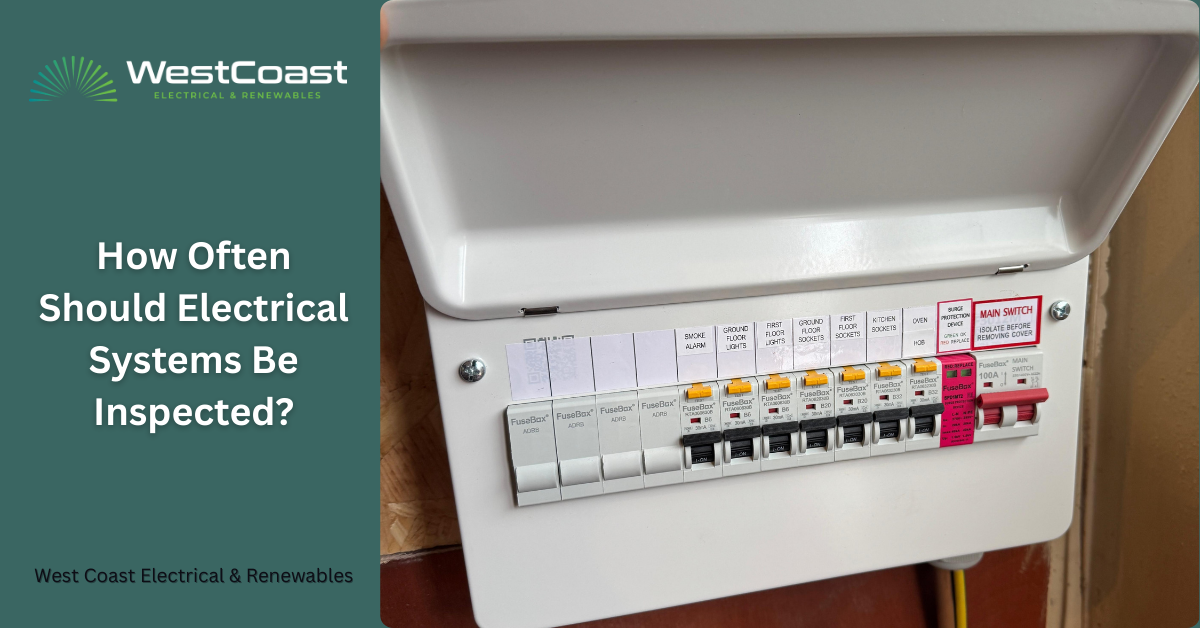
• Consumer unit or fuse box condition
• Wiring and cable insulation
• Earthing and bonding arrangements
• Sockets, switches, and light fittings
• Signs of overheating or damage
• Compliance with current wiring regulations
After the inspection, the electrician provides a report outlining the condition of the system along with any recommended actions. Clear observations help property owners understand what requires attention and when.
Why Inspections Help Prevent Electrical Problems
Many electrical faults develop gradually. Loose connections, aging cables, and overloaded circuits often show no immediate symptoms. Regular inspections help spot these issues early, before they cause disruption or safety concerns.
Inspections also support future planning. Whether you intend to install solar panels, battery storage, EV charging, or additional circuits, a well-maintained electrical system provides a safe foundation.
Peace of Mind for Homes and Businesses
Both homeowners and businesses benefit from knowing their electrics remain safe and compliant. Inspections provide documentation that confirms systems meet current standards.
For landlords and business owners, regular inspections also demonstrate responsibility and care. This helps build trust with tenants, employees, and customers alike.
Why Choose West Coast Electrical & Renewables?
West Coast Electrical & Renewables carries out electrical inspections for domestic and commercial properties across Blackpool, Poulton-le-Fylde, Thornton-Cleveleys, Lytham St Annes, Preston, and surrounding areas.
Our electricians hold NICEIC Domestic Installer status and follow current wiring regulations on every inspection. Because we also install renewable systems, we understand how solar panels, batteries, EV chargers, and heat pumps interact with existing electrics.
We take a practical, straightforward approach. We explain findings clearly and provide honest, easy-to-understand advice.

Staying Safe with Regular Electrical Inspections
Knowing how often electrical systems should be inspected helps protect properties and the people who use them. Regular checks reduce uncertainty, support compliance, and improve long-term reliability.
Whether you own a home, manage rental properties, or operate a business, keeping inspections up to date is one of the simplest ways to maintain electrical safety.